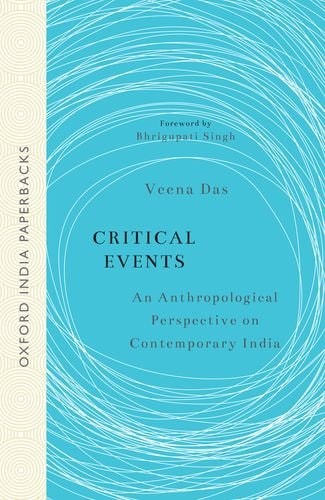
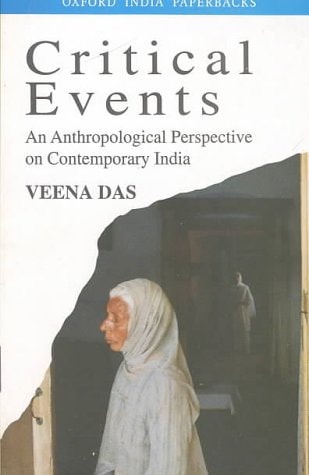
Critical Events: An Anthropological Perspective on Contemporary India
0
0
As an Amazon Associate and affiliate partner, Menrva Books earns from qualifying purchases. Learn more
Author Description
This book identifies certain moments in the history of contemporary India. These events concern Partition, sati, minority rights, the Bhopal industrial disaster, the nature of the Indian state, and various sociological issues. Veena Das redescribes these events and their implications within the framework of anthropological knowledge. She shows the various social transformations that have resulted in new configurations of relations between the local and the global within India. This work will be of interest to sociologists, anthropologists, historians, and political scientists.
Menrva's Summary
THE THESIS
How do specific moments of crisis and rupture in contemporary Indian history reshape the relationship between the state, the individual, and the broader social order? Veena Das, a prominent anthropologist, utilizes ethnographic inquiry and social theory to examine pivotal events such as the Partition, the practice of sati, and the Bhopal industrial disaster. By analyzing these occurrences, she argues that such crises are not merely isolated incidents but are transformative moments that reveal the underlying tensions and evolving configurations of power within the Indian state.
THE SCOPE MAP
What You Will Find
- Analysis of historical ruptures including the Partition and the Bhopal industrial disaster
- Examination of minority rights and the sociological implications of state-sanctioned violence
- Theoretical framework connecting local lived experiences to global political forces
- Investigation into the nature of the Indian state and its shifting social configurations
THE AUTHORITY PERSPECTIVE
Scholars and students of South Asian studies frequently cite this work as a foundational text for understanding the intersection of anthropology and political history. Readers often note the dense, analytical prose that requires a background in social theory to fully grasp the author's complex arguments.
Page Count:
240
Publication Date:
1995-01-01
Publisher:
Oxford University Press
ISBN-10:
019563540X
ISBN-13:
9780195635409
History
Anthropology
Sociology
India
Community Tags
Other Editions(3)
Similar Books