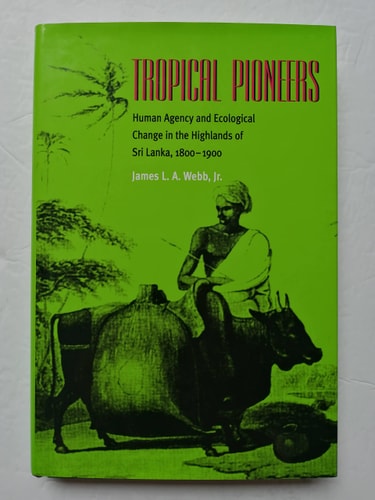
Tropical Pioneers: Human Agency and Ecological Change in the Highlands of Sri Lanka, 1800–1900
0
0
As an Amazon Associate and affiliate partner, Menrva Books earns from qualifying purchases. Learn more
Author Description
In 1800, the highlands of Sri Lanka had some of the most biologically diverse primary tropical rainforest ecosystems in the world. By 1900, only a few craggy corners and mountain caps had been spared the fire stick. Highland villagers, through the extension of slash-and-burn agriculture, and British managers, through the creation of plantations—first of coffee, then cinchona, and finally tea—had removed virtually the entire primary forest cover.Tropical Pioneers documents the conversion of a tropical rainforest biome and the collision between what previously had been more discrete ecological zones within South Asia. The ecological impacts were transformational. Author James L. A. Webb, Jr., demonstrates that profound ecological disruption occurred in the central highlands of Sri Lanka during the nineteenth century and suggests that the theme of ecological crisis brought about by the integration of tropical ecological zones during precolonial and colonial periods alike is an important one for historians to investigate elsewhere.Tropical Pioneers is based on extensive research in the National Archives of Sri Lanka, the National Agricultural Library at Gannaruwa, the Library of the Royal Asiatic Society-Ceylon Branch, the Royal Botanic Gardens at Kew, the Public Record Office of the United Kingdom, and the British Library.
Menrva's Summary
THE THESIS
This book investigates the rapid transformation of the Sri Lankan highland rainforest biome during the nineteenth century, questioning how human agency and colonial economic interests drove ecological collapse. James L. A. Webb Jr. utilizes extensive archival research from both Sri Lankan and British repositories to analyze the shift from diverse primary forests to intensive plantation agriculture. The author argues that the integration of tropical zones into global markets created a persistent state of ecological crisis that serves as a model for studying environmental history in other colonial contexts.
THE SCOPE MAP
What You Will Find
- Analysis of the transition from slash-and-burn agriculture to coffee, cinchona, and tea plantations.
- Examination of primary source documents from the National Archives of Sri Lanka and the British Library.
- A historical framework detailing the environmental impact of colonial land management policies between 1800 and 1900.
- Evidence regarding the loss of biodiversity and the physical alteration of the central highland landscape.
THE AUTHORITY PERSPECTIVE
Historians and environmental scholars recognize this work as a rigorous, archive-based study of colonial ecological transformation. Readers frequently note the academic density of the prose and the author's meticulous attention to primary source documentation.
Page Count:
243
Publication Date:
2002-03-01
Publisher:
Ohio University Press
ISBN-10:
0195663209
ISBN-13:
9780195663204
History
Sri Lanka
Agriculture
Environmental History
Ecology
Colonialism
Community Tags
Similar Books