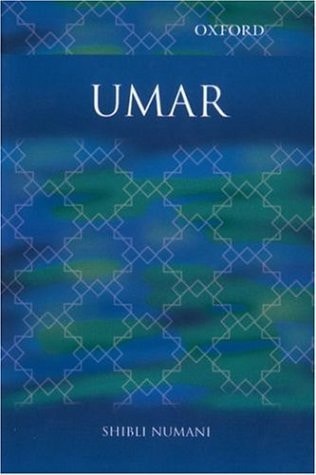
Umar
0
0
As an Amazon Associate and affiliate partner, Menrva Books earns from qualifying purchases. Learn more
Author Description
Umar, the second caliph, is honored by Muslims as the epitome of the just ruler. His reign (634-44 CE) built an empire that, to this day, defines the cultural and geographical heartlands of the Islamic world. This is a new edition of the 1939 Urdu classic, translated and abridged to one-sixth its original edition to be of interest to the non-specialist reader, and links the conquests with reforms in law, government, and administration as well as Umar's personal efforts to embody the ethos of Islam.
Menrva's Summary
THE THESIS
This work investigates the governance, administrative reforms, and personal character of Umar ibn al-Khattab, the second caliph of Islam, to determine his role in shaping the early Islamic empire. Shibli Numani, a renowned scholar of Islamic history, utilizes primary historical accounts to construct a portrait of Umar as a model of justice and statecraft. The text argues that Umar's leadership was defined by a synthesis of military expansion and the implementation of rigorous legal and social reforms that established the foundation of the Islamic state.
THE SCOPE MAP
What You Will Find
- Historical analysis of the Islamic Caliphate during the period of 634-644 CE.
- Examination of administrative, legal, and governmental reforms implemented under Umar's rule.
- Synthesis of primary source material regarding the expansion of the early Islamic empire.
- Discussion of the personal ethics and religious devotion that informed Umar's public policy.
THE AUTHORITY PERSPECTIVE
Scholars and historians recognize this work as a significant abridgment of a foundational Urdu text, making complex historical analysis accessible to a broader audience. Readers frequently note that the text provides a clear, concise overview of the administrative structures that defined the early Caliphate.
Page Count:
160
Publication Date:
2003-07-10
Publisher:
Oxford University Press
ISBN-10:
0195660471
ISBN-13:
9780195660470
History
Biography
Islamic History
Community Tags
Similar Books