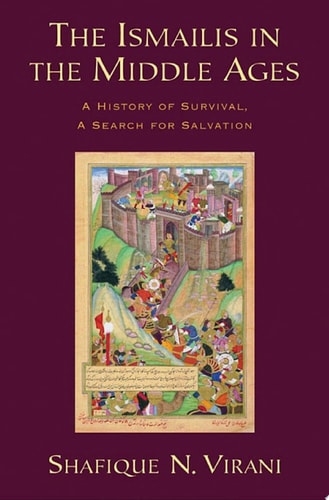
The Ismailis in the Middle Ages: A History of Survival, a Search for Salvation
0
0
As an Amazon Associate and affiliate partner, Menrva Books earns from qualifying purchases. Learn more
Author Description
"None of that people should be spared, not even the babe in its cradle." With these chilling words, the Mongol warlord Genghis Khan declared his intention to destroy the Ismailis, one of the most intellectually and politically significant Muslim communities of medieval Islamdom. The massacres that followed convinced observers that this powerful voice of Shi'i Islam had been forever silenced. Little was heard of these people for centuries, until their recent and dramatic emergence from obscurity. Today they exist as a dynamic and thriving community established in over twenty-five countries. Yet the interval between what appeared to have been their total annihilation, and their modern, seemingly phoenix-like renaissance, has remained shrouded in mystery. Drawing on an astonishing array of sources gathered from many countries around the globe, The Ismailis in the Middle Ages: A History of Survival, A Search for Salvation is a richly nuanced and compelling study of the murkiest portion of this era. In probing the period from the dark days when the Ismaili fortresses in Iran fell before the marauding Mongol hordes, to the emergence at Anjudan of the Ismaili Imams who provided a spiritual centre to a scattered community, this work explores the motivations, passions and presumptions of historical actors. With penetrating insight, Shafique N. Virani examines the rich esoteric thought that animated the Ismailis and enabled them to persevere. A work of remarkable erudition, this landmark book is essential reading for scholars of Islamic history and spirituality, Shi'ism and Iran. Both specialists and informed lay readers will take pleasure not only in its scholarly perception, but in its lively anecdotes, quotations of delightful poetry, and gripping narrative style. This is an extraordinary book of historical beauty and spiritual vision.
Menrva's Summary
THE THESIS
This work investigates how the Ismaili community survived the catastrophic Mongol invasions of the 13th century to maintain their spiritual and social identity. Shafique N. Virani, a scholar of Islamic studies, utilizes a diverse range of international primary sources to reconstruct the history of the Ismailis during the period between the fall of their Iranian fortresses and the later emergence of the Anjudan period. The book argues that the community's survival was not merely a matter of political maneuvering but was deeply rooted in their esoteric thought and spiritual resilience. By analyzing historical actors and their motivations, the author provides a framework for understanding the continuity of the Ismaili faith through centuries of persecution.
THE SCOPE MAP
What You Will Find
- Historical analysis of the Ismaili community from the Mongol conquest to the Anjudan period
- Examination of the role of the Ismaili Imams in providing spiritual cohesion
- Integration of primary source documents, including historical records and poetry
Scope Limits
- The text focuses primarily on the Iranian Ismaili experience rather than a global history of all Ismaili branches
- It does not provide a comprehensive modern history of the community beyond the transition period
THE AUTHORITY PERSPECTIVE
Scholars and historians recognize this work as a significant contribution to the study of medieval Shi'i Islam and the resilience of minority communities. Readers frequently note that the prose balances academic rigor with an accessible narrative style that incorporates poetry and historical anecdotes.
Page Count:
321
Publication Date:
2007-01-01
Publisher:
Oxford University Press
ISBN-10:
0190295201
ISBN-13:
9780190295202
History
Religion
Islamic History
Middle Eastern
Shiism
Ismailites
Community Tags
Similar Books