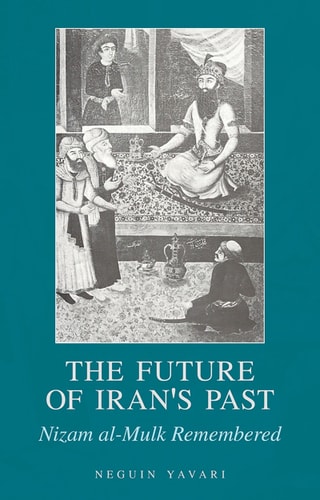
The Future of Iran's Past: Nizam al-Mulk Remembered
0
0
As an Amazon Associate and affiliate partner, Menrva Books earns from qualifying purchases. Learn more
Author Description
The Future of Iran's Past is a critical study of the life and afterlife of Nizam al-Mulk (1018-92), celebrated Persian vizier and stalwart figure of power and authority in medieval Islamic society. He became the de facto ruler of a vast empire, with a final apotheosis as Islamic history's archetypal good vizier. Such was his standing among the glitterati of his era that he was considered an ideal replacement for the Abbasid caliph himself.As well as the outstanding figure in a long run of great viziers and administrators who dominated premodern Islamic politics, al-Mulk is remembered as the most prominent politician of the period to perceive new beginnings and radical departures. Neguin Yavari offers a close reading of al-Mulk's many legacies, revealing a complex imbrication of political and religious authority, as well as pre-Islamic and Islamic influences that have together shaped modern Iran. She shows that the new Iran of al-Mulk's singular vision, rather than a tale of uninterrupted Iranisation, is imbued with an extensive interplay of residual and emergent tendencies.
Menrva's Summary
THE THESIS
This work investigates how the legacy of the medieval Persian vizier Nizam al-Mulk serves as a foundational element in the construction of modern Iranian political and religious identity. Neguin Yavari, a scholar of Islamic history, utilizes a close reading of historical texts and political records to analyze al-Mulk's role as both a pragmatic administrator and an archetypal figure of authority. The book argues that al-Mulk's vision for the state was not a linear continuation of tradition, but a complex synthesis of pre-Islamic and Islamic influences that continues to inform contemporary Iranian governance.
THE SCOPE MAP
What You Will Find
- An analysis of the life and administrative career of Nizam al-Mulk (1018-92).
- A study of the intersection between political power and religious authority in medieval Islamic society.
- An examination of the historical memory and myth-making surrounding the figure of the 'good vizier'.
Scope Limits
- The text does not provide a comprehensive biography of all contemporary Abbasid figures.
- The analysis focuses primarily on the political and intellectual legacy rather than a detailed military history of the Seljuk Empire.
THE AUTHORITY PERSPECTIVE
Experts in Middle Eastern studies recognize this work as a nuanced contribution to the historiography of Persian political thought. Readers frequently note the academic density of the prose, which is intended for scholars and students of Islamic history.
Page Count:
256
Publication Date:
2018-02-15
Publisher:
Oxford University Press
ISBN-10:
019085510X
ISBN-13:
9780190855109
History
Biography
Islamic History
Middle Eastern
Iran
Persian History
Community Tags
Similar Books