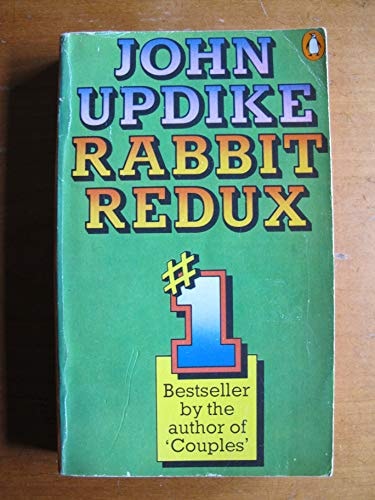
Rabbit Redux
0
0
As an Amazon Associate and affiliate partner, Menrva Books earns from qualifying purchases. Learn more
Author Description
In this sequel to Rabbit, Run, John Updike resumes the spiritual quest of his anxious Everyman, Harry “Rabbit” Angstrom. Ten years have passed; the impulsive former athlete has become a paunchy thirty-six-year-old conservative, and Eisenhower’s becalmed America has become 1969’s lurid turmoil of technology, fantasy, drugs, and violence. Rabbit is abandoned by his family, his home invaded by a runaway and a radical, his past reduced to a ruined inner landscape; still he clings to semblances of decency and responsibility, and yearns to belong and to believe.
Menrva's Summary
THE PULSE
Harry “Rabbit” Angstrom faces the disintegration of his domestic life amidst the cultural upheaval of 1969 America. Ten years after his initial flight, the former athlete now navigates a mid-life crisis defined by political polarization, shifting social norms, and personal abandonment. His objective is to maintain a sense of order and moral grounding while his home is occupied by a radicalized runaway and his own family life fractures. The narrative utilizes a third-person limited perspective to track Rabbit’s internal anxieties against the backdrop of a rapidly changing national landscape.
INSIDE THE PAGES
- Detailed exploration of 1960s American counterculture
- Examination of middle-class malaise and conservative disillusionment
- Introspective character study of a flawed protagonist
- Use of sensory-rich prose to depict suburban decay
- Integration of political events into personal narrative
- Focus on the tension between individual desire and societal responsibility
- Exploration of generational conflict
- Non-linear psychological progression of the protagonist
THE COLLECTIVE ECHO
Readers and critics frequently highlight the precision of Updike’s prose in capturing the specific anxieties of the late 1960s. Discussion often centers on the protagonist’s evolution from a youthful runaway to a disillusioned, middle-aged conservative struggling to find meaning. Many observers note the effectiveness of the atmosphere, which mirrors the chaotic external world with Rabbit’s internal instability. The balance of character development remains the primary focus, as the narrative prioritizes psychological depth over traditional plot-driven action. Readers often find the exploration of themes like domestic failure and social alienation to be the most compelling aspects of the work.
Page Count:
348
Publication Date:
1973-01-01
Publisher:
Penguin
ISBN-10:
0140034978
ISBN-13:
9780140034974
Literary Fiction
Contemporary
Character Study
General
classic
Social Commentary
Middle class
Angstrom Harry Fictitious character
Community Tags
Similar Books