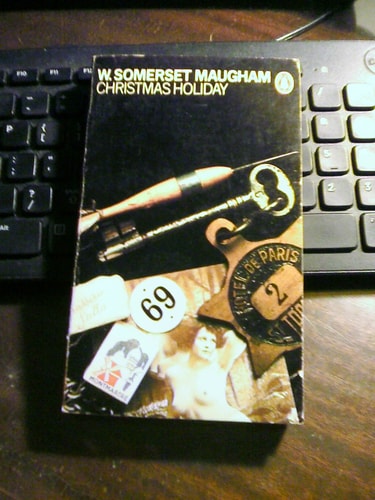
Christmas Holiday
0
0
As an Amazon Associate and affiliate partner, Menrva Books earns from qualifying purchases. Learn more
Author Description
For Christmas, Charley Mason's father granted him a trip to Paris, all expenses paid. It should have been a lark, but on his first night Charley meets a woman whose story will forever change his life.For Lydia has seen tragedy. The Russian Revolution displaced her family, left her homeless, fatherless. And for reasons that elude Charley, Lydia pines for a man half a world away--a dope dealer and murderer whose sins Lydia seeks to absolve through her own self- destruction. Haunting, erotic, deeply effecting, Christmas Holiday explores two souls capsized by compassion--and the confusion that engulfed a generation in the days between the Great Wars.
Menrva's Summary
THE PULSE
A young man's carefree holiday in Paris transforms into a profound confrontation with the harsh realities of human suffering and moral ambiguity. Charley Mason, a sheltered Englishman, arrives in France expecting a lighthearted vacation, but his encounter with Lydia, a Russian émigré, pulls him into a dark narrative of displacement and obsession. As Charley attempts to understand Lydia's devotion to her imprisoned, criminal husband, he is forced to reconcile his own middle-class values with the chaotic, often cruel forces that shaped the post-Great War era. The narrative framework utilizes a third-person perspective to observe the widening gap between Charley's naive worldview and the grim experiences of those scarred by political upheaval.
INSIDE THE PAGES
- Exploration of the psychological aftermath of the Russian Revolution
- Contrast between British bourgeois stability and continental instability
- Examination of self-sacrifice and moral absolution
- Character-driven dialogue focusing on existential disillusionment
- Atmospheric depiction of 1930s Paris
- Analysis of the criminal underworld and its social context
- Focus on the loss of innocence during the interwar period
- Non-sentimental approach to human suffering and compassion
THE COLLECTIVE ECHO
Discussion often centers on Maugham's clinical, detached prose style which effectively highlights the protagonist's gradual loss of naivety. Readers frequently highlight the stark contrast between the holiday setting and the heavy, somber themes of the narrative. Critics often note the effectiveness of the character studies, particularly how Lydia's tragic history challenges the reader's perception of morality and redemption. The book is widely recognized for its ability to capture the pervasive sense of confusion and instability that defined the generation between the two World Wars. Many readers appreciate the lack of moralizing, as the author allows the complex motivations of the characters to speak for themselves without clear resolution.
Page Count:
252
Publication Date:
1977-09-29
Publisher:
Penguin Books
ISBN-10:
0140026460
ISBN-13:
9780140026467
Historical Fiction
Literary Fiction
Social Commentary
Psychological
classic