To a God Unknown
0
0
As an Amazon Associate and affiliate partner, Menrva Books earns from qualifying purchases. Learn more
Author Description
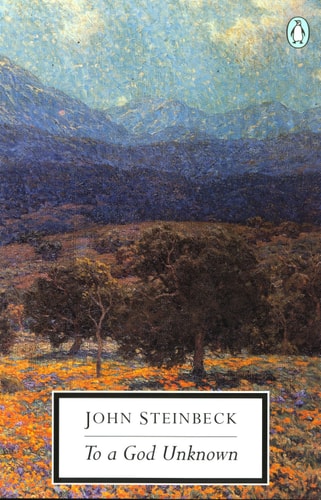
This is the story of Joseph Wayne, who while his father lies dying, makes his way from Vermont to a fertile valley in California. There, on his new ranch, he comes to see a huge tree as the embodiment of his father's spirit. His brothers and their wives join him, and they all prosper. But one of them terrified by Joseph's pagan beliefs, kills the tree. One of Steinbeck's early works.
Menrva's Summary
THE PULSE
Joseph Wayne leaves his home in Vermont to establish a homestead in California, where he develops a profound and unsettling spiritual connection to the land and a specific, ancient tree. Joseph seeks to cultivate the soil and build a legacy for his family, but his internal drive toward pantheistic worship creates friction with his brothers and the encroaching social norms of the region. As he attempts to anchor his identity to the physical landscape, he faces opposition from those who view his reverence for nature as a dangerous departure from traditional faith. The narrative follows his struggle to maintain his vision of the land as a living entity while external forces and environmental shifts threaten to dismantle his sanctuary. The story is presented through a third-person perspective that emphasizes the stark, elemental nature of the California valley.
INSIDE THE PAGES
- Exploration of pantheistic and animistic belief systems
- Detailed descriptions of the California landscape and agricultural life
- Examination of the tension between individual spirituality and communal values
- Use of symbolic imagery centered on trees and water
- Focus on the psychological impact of isolation and land ownership
- Depiction of the generational transition from East Coast roots to Western expansion
- Analysis of the human desire to personify natural forces
- Pacing that mirrors the slow, rhythmic cycles of farming and drought
THE COLLECTIVE ECHO
Discussion often centers on the early development of Steinbeck's preoccupation with the relationship between man and the environment. Readers frequently highlight the intense, almost mythic quality of the prose that distinguishes this work from his later, more socially focused novels. Critics often note that the book functions as an allegory for the human need to find meaning in a seemingly indifferent natural world. The balance of character development leans heavily toward Joseph's internal state, often leaving the supporting cast to serve as foils for his spiritual evolution. Many readers find the atmospheric intensity of the setting to be the most compelling aspect of the narrative.
Page Count:
272
Publication Date:
1976-09-30
Publisher:
Penguin Books
ISBN-10:
0140042334
ISBN-13:
9780140042337
Literary Fiction
Historical
classic
Literary
Regional
Philosophical