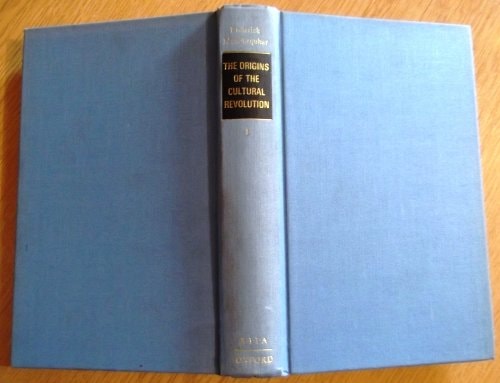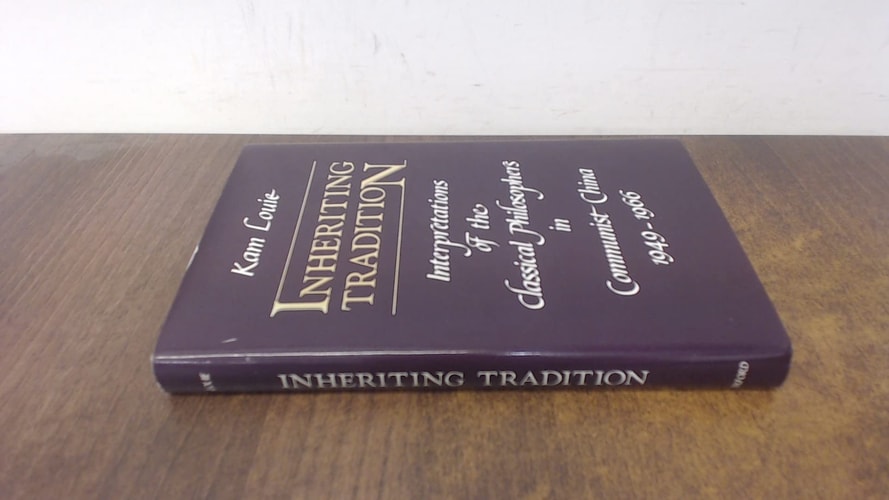
Inheriting Tradition: Interpretations of the Classical Chinese Philosophers in Communist China, 1949-1966
0
0
As an Amazon Associate and affiliate partner, Menrva Books earns from qualifying purchases. Learn more
Author Description
One of the most intriguing tasks facing thinkers in Communist China has been to determine the place of tradition in a changing world. While officials and intellectuals have upheld the principle that "the past should serve the present," the varied interpretations of how this should be done have given rise to bitter conflicts. Examining the many arguments surrounding this debate that have been drawn from Daoism, Confucianism, Maoism, and Legalism, this work sheds light on the philosophical foundations of the Cultural Revolution and touches on what it means to be Chinese in a Communist state.
Menrva's Summary
THE THESIS
This work investigates how Chinese intellectuals and political officials reconciled traditional philosophical systems with the ideological requirements of the Communist state between 1949 and 1966. Kam Louie, a scholar specializing in Chinese intellectual history, analyzes the complex debates surrounding the utility of the past in a revolutionary society. By examining the shifting interpretations of classical thought, the author demonstrates how these philosophical arguments provided the intellectual scaffolding for the political upheavals that culminated in the Cultural Revolution.
THE SCOPE MAP
What You Will Find
- Analysis of the integration of Daoism, Confucianism, and Legalism into Maoist political discourse.
- Examination of the intellectual climate in China during the period from 1949 to 1966.
- Discussion of the tension between traditional cultural identity and Marxist-Leninist ideology.
- Evaluation of the role of academic debate in shaping state policy and revolutionary rhetoric.
THE AUTHORITY PERSPECTIVE
Experts recognize this text as a rigorous examination of the intellectual history of early Communist China. Scholars often cite the work for its detailed mapping of how classical philosophy was repurposed to serve contemporary political agendas.
Page Count:
276
Publication Date:
1987-02-19
Publisher:
Oxford University Press
ISBN-10:
0195840461
ISBN-13:
9780195840469
Philosophy
History
Chinese History
Asian Studies
Community Tags
Similar Books