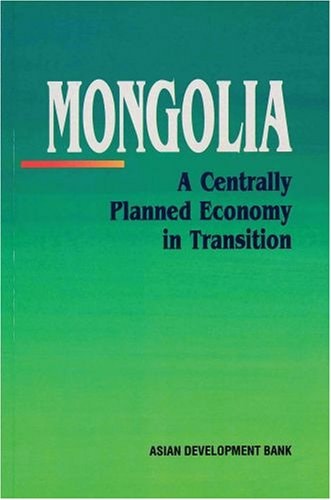
Mongolia: A Centrally Planned Economy in Transition
0
0
As an Amazon Associate and affiliate partner, Menrva Books earns from qualifying purchases. Learn more
Author Description
With the advent of perestroika and glasnost in the former Soviet Union and Eastern Europe, and their own dissatisfaction with the socialist economic model, Mongolia has chosen to open its economy to a range of reforms. This work studies the changes which began in 1986 and gained momentum in 1991 to elect a new government. The work reviews Mongolia's economic past and focuses on recent transformations. It includes detailed time series data on economic and social indicators.
Menrva's Summary
THE THESIS
This work investigates the structural transition of Mongolia from a socialist, centrally planned economic model to a market-oriented system following the political shifts of the late 1980s and early 1990s. The authors, a team of experts from the Asian Development Bank, utilize primary economic data and historical analysis to document the initial phases of reform. They evaluate the efficacy of these policy changes against the backdrop of the collapse of the Soviet-aligned socialist framework. The text serves as a diagnostic assessment of the country's economic trajectory during a period of significant institutional upheaval.
THE SCOPE MAP
What You Will Find
- Comprehensive analysis of Mongolian economic reforms initiated between 1986 and 1991.
- Detailed time series data regarding national economic and social indicators.
- Evaluation of the transition from a centrally planned socialist model to a market-based economy.
- Assessment of the political and social factors influencing the 1991 government transition.
THE AUTHORITY PERSPECTIVE
Experts and researchers in development economics identify this text as a foundational reference for understanding the early post-socialist transition period in Mongolia. Readers frequently note the density of the statistical data provided, which remains a valuable resource for historical economic comparative studies.
Page Count:
268
Publication Date:
1993-02-11
Publisher:
Asian Development Bank Press
ISBN-10:
0195858948
ISBN-13:
9780195858945
Economics
History
Asia
Mongolia
Community Tags
Other Editions(2)
Similar Books