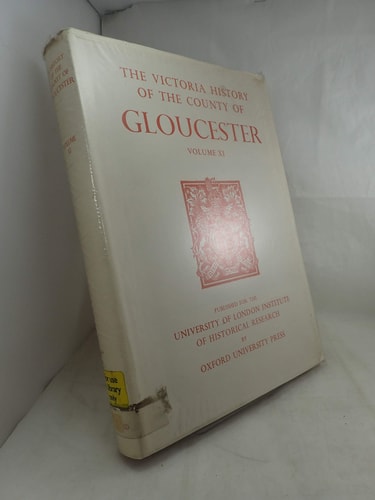
A History of the County of Gloucester: Volume XI
0
0
As an Amazon Associate and affiliate partner, Menrva Books earns from qualifying purchases. Learn more
Author Description
The volume covers the 18 parishes of the Cotswold hundreds of Bisley and Longtree and includes the market towns of Stroud, Tetbury, Painswick, and Minchinhampton. In the deep valleys centred on Stroud the cloth industry was the shaping force, adding interest and complexity to the story of even the smaller parishes like Rodborough and Woodchester. There, where the cloth-mills clustered thickly along the valleys, a closely knit society of clothier families played the leading role while humbler cloth-workers swelled the population, establishing new villages around the commons of Bisley and Minchinhampton and elsewhere in the area. In the early 19th century the factory system concentrated the cloth industry in fewer and larger mills but new industries like iron-founding, stick-making, and silk-throwing moved in, and local industry continued to expand and diversify in the 20th century. Painswick and Minchinhampton, medieval market towns, were eventually outstripped by the newer town of Stroud which ex-panded considerably in the 19th century under the influence of the railway and a new system of turnpike roads built along the valleys. The nonconformist churches, particularly at Nailsworth, were important, and in the 19th century Woodchester became a centre of Roman Catholicism and Bisley a stronghold of the Oxford Movement. Outside the valleys the two hundreds took in a less populous area of high, arid downland where, in parishes like Horsley and Rodmarton, monastic owners once farmed sheep on a considerable scale and landowning families like the Ducies, Estcourts, Coxes, and Stephenses long remained dominant. Tetbury, made a borough about 1200, later derived prosperity from its wool-market and wool-stapling industry and, like Painswick, survives as a fine example of the Cotswold stone-built town. Altogether the area has a rich variety of domestic architecture, including ancient manor-houses like Daneway and Chavenage, the numerous 17th and 18th century houses of the clot
Menrva's Summary
THE THESIS
This volume investigates the historical development, economic evolution, and social structure of the Cotswold hundreds of Bisley and Longtree within the county of Gloucester. Author N. M. Herbert utilizes the rigorous, archival-based methodology characteristic of the Victoria County History project to document the transformation of these parishes from medieval sheep-farming communities into centers of industrial cloth production. The text provides a comprehensive analysis of how geography, religious movements, and infrastructure projects like turnpike roads and railways shaped the regional identity of towns such as Stroud, Tetbury, and Painswick.
THE SCOPE MAP
What You Will Find
- Detailed historical accounts of 18 specific parishes within the Bisley and Longtree hundreds.
- Analysis of the cloth industry's transition from cottage-based production to the 19th-century factory system.
- Documentation of architectural evolution, ranging from medieval manor houses to 17th and 18th-century stone-built residences.
- Examination of religious shifts, including the influence of nonconformist churches, Roman Catholicism, and the Oxford Movement.
THE AUTHORITY PERSPECTIVE
Experts and local historians regard this volume as a foundational reference for the study of Gloucestershire's industrial and social history. Readers frequently note the academic density of the prose and the meticulous attention to primary source documentation that characterizes the Victoria County History series.
Page Count:
381
Publication Date:
1976-02-01
Publisher:
Victoria County History
ISBN-10:
0197227457
ISBN-13:
9780197227459
History
Architecture
Geography
British History
Great Britain
Local History
Community Tags
Similar Books