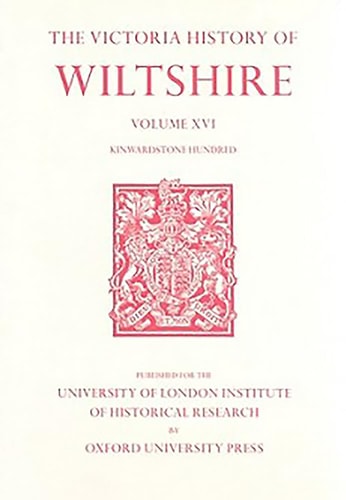
A History of Wiltshire: Volume XVI Kinwardstone Hundred
0
0
As an Amazon Associate and affiliate partner, Menrva Books earns from qualifying purchases. Learn more
Author Description
THE VOLUME relates the history of the 15 parishes in Kinwardstone hundred in east Wiltshire. The hundred lay between two medieval royal forests, Savernake and Chute. It is generally fertile and was devoted to sheep-and-corn husbandry. Each of c. 45 villages and hamlets in it had its own set of open fields and its own common pasture, and there is evidence of colonization from some of the larger villages. Much of the common pasture was inclosed in the 17th century, most of the open fields were inclosed in the 18th. Outside the villages new farmsteads were built on downland in the 19th century, and in many of the villages in the later 10th century the sites of farmsteads were used fornew housing. The largest villages are Great Bedwyn, which was an early borough and retains a small market square, Pewsey, which had a market in the 19th century and became a local shopping centre in the 20th, and Burbage. Only 12parish churches stood in the hundred in the Middle Ages, when most of their revenues were taken by religious houses and prebendaries of Salisbury cathedral; their parishes were large and most villages lacked a church. Five new churches were built in the 19th century. A great estate in the hundred was accumulated by Protector Somerset, whose descendants built Tottenham House in parkland on the edge of Savernake forest. Notable among other secular buildingsin the hundred is the red-brick almshouse for 50 widows which was built at Froxfield in the 1690s.PARISHES: GREAT BEDWYN (INCLUDING GRAFTON), LITTLE BEDWYN, BURBAGE, BUTTERMERE, CHILTON FOLIAT, CHUTE, CHUTE FOREST, COLLINGBOURNE KINGSTON, EASTON, FROXFIELD, MILTON LILBOURNE, PEWSEY, SAVERNAKE, TIDCOMBE (AND FOSBURY), WOOTTON RIVERS.
Menrva's Summary
THE THESIS
This volume investigates the historical development, land use, and social evolution of the 15 parishes comprising the Kinwardstone hundred in east Wiltshire. D. A. Crowley, an established editor within the Victoria County History project, utilizes extensive archival records and topographical analysis to document the transition of this region from medieval forest-adjacent settlements to modern agricultural and residential hubs. The work provides a systematic examination of economic shifts, including the transition from sheep-and-corn husbandry to enclosure, while mapping the administrative and ecclesiastical history of the area.
THE SCOPE MAP
What You Will Find
- Detailed historical accounts of 15 specific parishes including Great Bedwyn, Pewsey, and Burbage.
- Analysis of land management transitions, specifically the enclosure of open fields and common pastures from the 17th to 19th centuries.
- Documentation of ecclesiastical infrastructure, including the distribution of medieval churches and the influence of Salisbury cathedral.
- Architectural surveys of significant secular structures such as Tottenham House and the Froxfield almshouse.
THE AUTHORITY PERSPECTIVE
Experts recognize this volume as a foundational reference for local historians and researchers specializing in the topography of Wiltshire. Readers frequently note the academic density of the prose, which serves as a rigorous standard for regional historical documentation.
Page Count:
294
Publication Date:
1999-01-01
Publisher:
Victoria County History
ISBN-10:
0197227937
ISBN-13:
9780197227930
History
Reference
Great Britain
British History
Geography
Local History
Community Tags
Similar Books