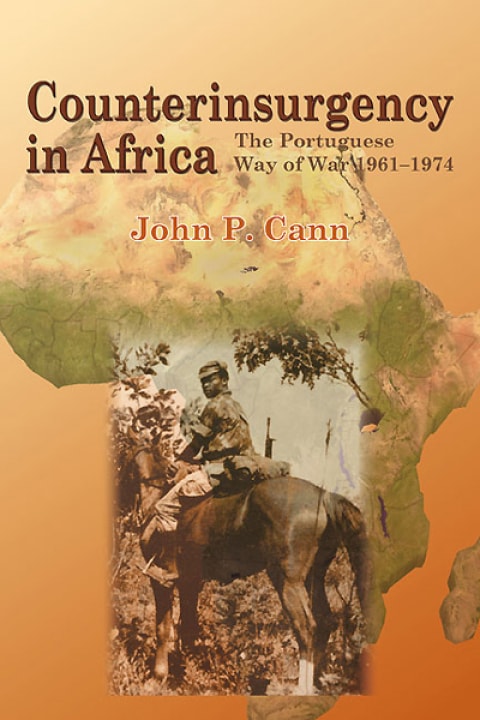
Counterinsurgency in Africa: The Portuguese Way of War 1961-74
0
0
As an Amazon Associate and affiliate partner, Menrva Books earns from qualifying purchases. Learn more
Author Description
Portugal was the first colonial power to arrive in Africa and the last to leave. As other European states were granting independence to their African possessions, Portugal chose to stay and fight despite the small odds of success. That it did so successfully for thirteen years across the three fronts of Angola, Guiné and Mozambique remains a remarkable achievement, particularly for a nation of such modest means. The Portugese approach to the conflict was distinct in that it sought to combine the two-pronged national strategy of containing the cost of the war and of spreading the burden to the colonies, with the solution on the battlefield. Even today Portugal's systematic and logical approach to its insurgency challenge holds valuable lessons for any nation forced to wage a small war on the cheap. John P. Cann's study is both wide-ranging and comprehensive, providing a description and analysis of Portugese counterinsurgency, including aspects such as intelligence and mobility, besides discussing social and logistical operations. Whilst discussing operations that took place during the 1960s and 1970s this study remains very relevant to present-day counterinsurgency operations.
Menrva's Summary
THE THESIS
This book examines Portugal's unique and sustained counterinsurgency strategy during its colonial wars in Africa from 1961 to 1974. The study details how Portugal, despite limited resources, managed to fight a thirteen-year war across Angola, Guiné, and Mozambique by combining a national strategy of cost containment and burden-sharing with battlefield solutions. It analyzes the systematic and logical approach to insurgency, covering intelligence, mobility, social, and logistical operations, offering lessons relevant to modern counterinsurgency efforts.
THE SCOPE MAP
- Analysis of Portuguese counterinsurgency doctrine and practice in Angola, Guiné, and Mozambique.
- Examination of intelligence gathering and operational mobility as key components of the strategy.
- Discussion of social and logistical operations supporting the military campaign.
- Exploration of the challenges faced by Portugal as a colonial power fighting a protracted war.
- Assessment of the long-term relevance of Portugal's 'way of war' for contemporary conflicts.
THE AUTHORITY PERSPECTIVE
This study is recognized for its comprehensive and systematic analysis of Portuguese counterinsurgency operations during a critical period of African decolonization. The author's detailed examination of the military, intelligence, and logistical aspects of the conflict provides valuable insights into a unique approach to warfare. The book is noted for its relevance to modern counterinsurgency, offering lessons learned from a conflict fought with modest means. Its detailed scope makes it a significant contribution to military history and African studies.
Page Count:
460
Publication Date:
2012-01-01
Publisher:
Helion and Company
ISBN-10:
1909384305
ISBN-13:
9781909384309
History
Non-Fiction
Colonialism
African history
Counterinsurgency
Military History
Community Tags
Similar Books