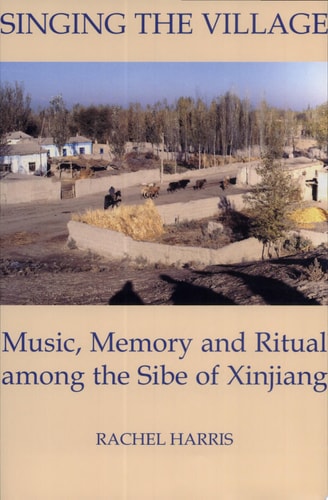
Singing the Village: Music, Memory and Ritual Among the Sibe of Xinjiang
0
0
As an Amazon Associate and affiliate partner, Menrva Books earns from qualifying purchases. Learn more
Author Description
The Sibe are an immigrant group, Qing dynasty bannermen who made a three-year "long march" from Manchuria in the 18th century to serve as a border garrison in the newly conquered Western Regions of the Qing Chinese empire. They preserved their military structure and a discrete identity in the multi-ethnic region of Xinjiang and are now officially recognized as an ethnic minority nationality under the People's Republic. They are known in China today as the last speakers of the Manchu language, and as preservers of their ancient traditions. This study of their music culture reveals not fossilized tradition but a shifting web of borrowings, assimilation, and retention.Singing the Village is a readable, anthropologically interesting and musically informed account of culture and performance in the Chinese region of Xinjiang. The book approaches musical and ritual life in this ethnically diverse region through an understanding of society in terms of negotiation, practice, and performance. It explores the relations between shamanism, song, and notions of externality and danger, bringing recent theories on shamanism to bear on questions of the structural and affective powers of ritual music. It focuses on the historical demands of identity, boundary maintenance and creation among the Sibe, and on the role of musical performance in maintaining popular memory, and it discusses the impact of state policies of the Chinese Communist Party on village musical and ritual life.Singing the Village draws on a wide range of Chinese, Sibe-Manchu language sources, and oral sources including musical recordings and interviews gathered in the course of fieldwork in Xinjiang. It includes musical transcriptions, glossaries of Sibe-Manchu and Chinese terms, and is accompanied by a free CD which includes 30 original field recordings.
Menrva's Summary
THE THESIS
This study investigates how the Sibe people of Xinjiang utilize music and ritual performance to negotiate identity, memory, and social boundaries within the context of the Chinese state. Rachel Harris, an ethnomusicologist, utilizes extensive fieldwork, including oral histories and musical recordings, to analyze the Sibe's transition from Qing dynasty bannermen to a recognized ethnic minority. The work argues that Sibe musical culture is not a static relic but a dynamic practice shaped by historical migration, state policy, and ongoing cultural assimilation.
THE SCOPE MAP
What You Will Find
- Historical analysis of the Sibe migration from Manchuria to the Xinjiang border region.
- Examination of the intersection between shamanistic practices and ritual song.
- Methodology incorporating musical transcriptions, linguistic glossaries, and original field recordings.
- Discussion on the impact of Chinese Communist Party policies on local cultural preservation.
THE AUTHORITY PERSPECTIVE
Experts recognize this work as a foundational text for understanding the intersection of musicology and minority identity in contemporary China. Scholars frequently highlight the book's rigorous use of multi-lingual primary sources and its nuanced approach to the politics of cultural performance.
Page Count:
248
Publication Date:
2005-02-24
Publisher:
British Academy
ISBN-10:
019726297X
ISBN-13:
9780197262979
Music
History
Sociology
Anthropology
Music Chinese
Community Tags
Other Editions(2)

Similar Books















Reader Comments
Share Your Thoughts
No comments yet. Be the first to share your thoughts!