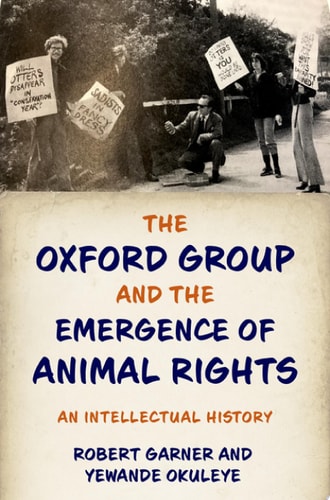
The Oxford Group and the Emergence of Animal Rights: An Intellectual History
0
0
As an Amazon Associate and affiliate partner, Menrva Books earns from qualifying purchases. Learn more
Author Description
Animal rights is now a concept that has achieved wide name-recognition. Vegetarianism, and even veganism, is now commonplace, representing a massive transformation in public attitudes. Fifty years ago, the concept of animal rights was almost unheard of and the animal protection movement lay dormant. Even vegetarians were regarded as, at best, cranks and, at worst, dangerous critics of the social order. Yet the late 1960s and early 1970s were a formative time for the contemporary animal rights movement. One of the most important and influential intellectual moments for animal rights occurred at this time at Oxford University among like-minded scholars who would become known as the Oxford Group. The Oxford Group and the Emergence of Animal Rights is about this little known group--a loose friendship group of primarily postgraduate philosophy students who attended the University of Oxford for a short period of time in the late 1960s. The book traces the early development of the Oxford Group and its influence on animal rights theory and activism. It also serves as a case study of how the emergence of important work and the development of new ideas can be explained, as well as how the intellectual development of participants in a friendship group is influenced by their participation in a creative community. For example, would Peter Singer have written his landmark book Animal Liberation--or anything about animal ethics--without being exposed to the other members of the Oxford Group? How would the discipline of animal ethics differ if the group had not produced their edited collection of articles, Animals, Men and Morals? Drawing on previously unpublished correspondence among and interviews with the surviving Oxford Group members, Robert Garner and Yewande Okuleye explore the social and political milieu in which the group formed to understand how such intellectual movements coalesce.
Menrva's Summary
THE THESIS
This book investigates the intellectual and social origins of the modern animal rights movement by examining the specific influence of the Oxford Group during the late 1960s and early 1970s. Robert Garner, a professor of political theory, and Yewande Okuleye utilize archival correspondence and primary source interviews to reconstruct the collaborative environment of these postgraduate philosophy students. The authors argue that the emergence of animal ethics as a formal discipline was not an isolated event but the result of a creative community whose collective discourse shaped seminal works like Animal Liberation.
THE SCOPE MAP
What You Will Find
- A detailed historical account of the Oxford University philosophy circle in the late 1960s.
- An analysis of the social dynamics within friendship groups that foster intellectual innovation.
- Primary source evidence derived from previously unpublished correspondence and direct interviews with surviving members.
- An examination of the transition of animal protection from a fringe concern to a recognized field of ethical inquiry.
THE AUTHORITY PERSPECTIVE
Scholars and historians of ethics recognize this work as a significant contribution to understanding the genealogy of contemporary animal rights theory. The text is noted for its rigorous use of primary source material to demystify the collaborative origins of a movement that has fundamentally altered public discourse.
Page Count:
196
Publication Date:
2020-01-01
Publisher:
Oxford University Press
ISBN-10:
0197508510
ISBN-13:
9780197508510
Philosophy
History
Intellectual History
Ethics
Animal Rights
Sociology
Special Topics
Community Tags
Similar Books