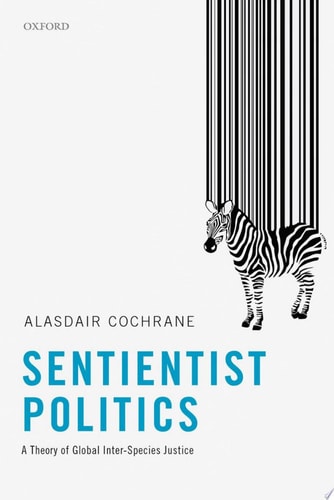
Sentientist Politics
0
0
As an Amazon Associate and affiliate partner, Menrva Books earns from qualifying purchases. Learn more
Author Description
There Is Now Widespread Agreement That Many Non-human Animals Are Sentient, And That This Fact Has Important Moral And Political Implications. Indeed, Most Are In Agreement That Animal Sentience Ought To Constrain The Actions Of Political Institutions, Limiting The Harms That Can Be Perpetrated Against Animals. The Primary Aim Of This Book Is To Show That The Political Implications Of Animal Sentience Go Even Further Than This. For This Book Argues That Sentience Establishes A Moral Equality And A Shared Set Of Rights Amongst Those Creatures Who Possess It. Crucially, This Worth And These Rights Create A Duty On Moral Agents To Establish And Maintain A Political Order Dedicated To Their Interests. This Book Is Devoted To Sketching What This 'sentientist Politics' Might Look Like. It Argues In Favour Of A ' Sentientist Cosmopolitan Democracy': A Global Political System Made Up Of Overlapping Local, National, Regional And Global Communities Comprised Of Human And Non-human Members Who Exist Within Shared 'communities Of Fate'. Furthermore, The Institutions Of Those Communities Should Be Democratic - That Is To Say, Participative, Deliberative And Representative. Finally, Those Institutions Should Include Dedicated Representatives Of Non-human Animals Whose Job Should Be To Translate The Interests Of Animals Into Deliberations Over What Is In The Public Good For Their Communities.
Menrva's Summary
THE THESIS
This book investigates the extent to which the scientific consensus on animal sentience necessitates a fundamental restructuring of global political institutions. Author Alasdair Cochrane, a scholar in political theory, utilizes a framework of moral equality to argue that sentient creatures possess inherent rights. He posits that these rights impose a duty upon human political agents to construct systems that actively represent and protect the interests of non-human animals.
THE SCOPE MAP
What You Will Find
- A theoretical framework for 'sentientist cosmopolitan democracy'
- Proposals for multi-level governance including local, national, and global communities
- Models for representative and deliberative democratic institutions
- Arguments for the inclusion of non-human interests in public policy
Scope Limits
- The text does not provide a detailed implementation manual for specific legislative changes
- It does not focus on the biological mechanisms of sentience itself
THE AUTHORITY PERSPECTIVE
Scholars in political philosophy and animal ethics frequently cite this work as a significant contribution to the discourse on interspecies justice. Readers often note the academic rigor of the prose and the systematic approach the author takes toward institutional design.
Page Count:
200
Publication Date:
2018-01-01
Publisher:
Oxford University Press
ISBN-10:
0192507028
ISBN-13:
9780192507020
Ethics
Social justice
Political Philosophy
Animal Rights
Community Tags
Similar Books