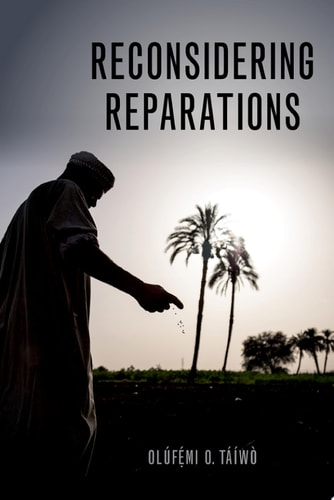
Reconsidering Reparations: Philosophy of Race
0
0
As an Amazon Associate and affiliate partner, Menrva Books earns from qualifying purchases. Learn more
Author Description
Reparations for slavery have become a reinvigorated topic for public debate over the last decade. Most theorizing about reparations treats it as a social justice project - either rooted in reconciliatory justice focused on making amends in the present; or, they focus on the past, emphasizing restitution for historical wrongs. Olúfhemi O. Táíwò argues that neither approach is optimal, and advances a different case for reparations - one rooted in a hopeful future that tackles the issue of climate change head on, with distributive justice at its core. This view, which he calls the "constructive" view of reparations, argues that reparations should be seen as a future-oriented project engaged in building a better social order; and that the costs of building a more equitable world should be distributed more to those who have inherited the moral liabilities of past injustices. This approach to reparations, as Táíwò shows, has deep and surprising roots in the thought of Black political thinkers such as James Baldwin, Martin Luther King Jr, and Nkechi Taifa, as well as mainstream political philosophers like John Rawls, Charles Mills, and Elizabeth Anderson. Táíwò's project has wide implications for our views of justice, racism, the legacy of colonialism, and climate change policy.
Menrva's Summary
THE THESIS
Olúfemi O. Táíwò investigates whether current frameworks for reparations are sufficient to address historical injustices and proposes a new, future-oriented model centered on distributive justice. Drawing on his background in political philosophy, Táíwò critiques existing reconciliatory and restitution-based models of reparations. He argues that the most effective path forward is a "constructive" approach that links the moral liabilities of past injustices to the urgent, collective task of building a more equitable social order in the face of climate change. By synthesizing the work of Black political thinkers and mainstream philosophers, he provides a rigorous framework for re-evaluating how society should distribute the costs of systemic progress.
THE SCOPE MAP
What You Will Find
- A critical analysis of traditional reconciliatory and restitution-based theories of reparations.
- The introduction of the "constructive" view of reparations as a forward-looking policy tool.
- An examination of the intersection between historical racial injustice and contemporary climate change policy.
- A synthesis of political thought from figures including James Baldwin, Martin Luther King Jr., John Rawls, and Charles Mills.
THE AUTHORITY PERSPECTIVE
Scholars and political theorists frequently note the intellectual rigor and clarity with which Táíwò navigates complex debates regarding justice and historical liability. The text is recognized as a significant contribution to contemporary political philosophy, offering a distinct and provocative alternative to standard discourse on reparations.
Page Count:
275
Publication Date:
2022-01-01
Publisher:
Oxford University Press
ISBN-10:
019750891X
ISBN-13:
9780197508916
History
Philosophy
Ethnic Studies
Climate Change
Race
Social justice
Community Tags
Similar Books