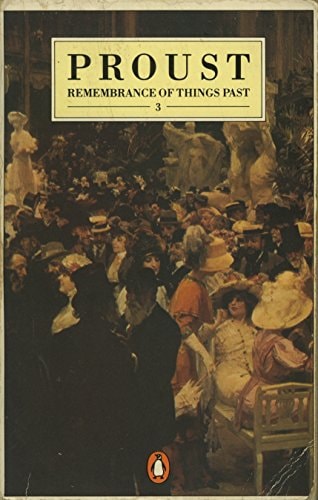
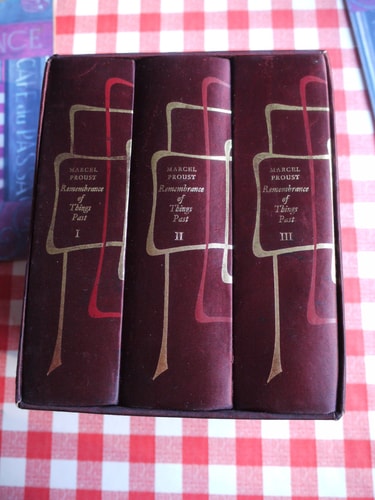
Remembrance of Things Past
0
0
As an Amazon Associate and affiliate partner, Menrva Books earns from qualifying purchases. Learn more
Author Description
Marcel Proust whiled away the first half of his life as a self-conscious aesthete and social climber. The second half he spent in the creation of the mighty roman-fleuve that is Remembrance of Things Past, memorializing his own dandyism and parvenu hijinks even as he revealed their essential hollowness. Proust begins, of course, at the beginning--with the earliest childhood perceptions and sorrows. Then, over several thousand pages, he retraces the course of his own adolescence and adulthood, democratically dividing his experiences among the narrator and a sprawling cast of characters. Who else has ever decanted life into such ornate, knowing, wrought-iron sentences? Who has subjected love to such merciless microscopy, discriminating between the tiniest variations of desire and self-delusion? Who else has produced a grief-stricken record of time's erosion that can also make you laugh for entire pages? The answer to all these questions nobody.
Menrva's Summary
THE PULSE
The narrative initiates with the involuntary memory of a madeleine dipped in tea, triggering a profound exploration of time, consciousness, and the nature of human experience. The protagonist navigates the intricate social hierarchies of French high society while attempting to reconcile his internal perceptions with the external reality of a changing world. Opposed by the relentless erosion of time and the inherent subjectivity of memory, the narrator seeks to capture the essence of his life through writing. The work utilizes a complex, non-linear structure that mirrors the associative nature of human thought and recollection.
INSIDE THE PAGES
- Extensive use of stream of consciousness and internal monologue
- Intricate, multi-clause sentence structures that expand on singular observations
- Deep psychological analysis of social status and class dynamics
- Exploration of involuntary memory as a catalyst for narrative progression
- Detailed examination of the nuances of romantic desire and jealousy
- Satirical portrayal of the French aristocracy and bourgeoisie
- Philosophical inquiry into the nature of art and aesthetic experience
- Gradual, expansive character development over several decades
THE COLLECTIVE ECHO
Readers and critics frequently discuss the immense scale and stylistic density of this work, noting its unique ability to transform mundane social interactions into profound philosophical inquiries. Discussion often centers on the narrator's meticulous attention to detail, which some find immersive while others describe as demanding. The balance between the author's sharp social satire and his melancholic reflection on the passage of time remains a primary focus for scholars. Many highlight the effectiveness of the prose in capturing the fluidity of human consciousness, making it a central point of reference for modernist literature. The work is widely recognized for its rigorous examination of how memory constructs identity over the course of a lifetime.
Page Count:
1136
Publication Date:
1983-07-05
Publisher:
Penguin Classic
ISBN-10:
0140059539
ISBN-13:
9780140059533
Classic Literature
Philosophical
Modernist
French literature
Psychological
Community Tags
Other Editions(5)


Similar Books