Cousin Bette
0
0
As an Amazon Associate and affiliate partner, Menrva Books earns from qualifying purchases. Learn more
Author Description
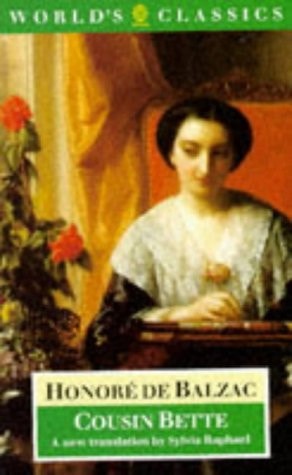
Cousin Bette (1846) is considered to be Balzac's last great novel, and a key work in his Human Comedy. Set in the Paris of the 1830s and 1840s, it is a complex tale of the devastating effect of violent jealousy and sexual passion. Against a meticulously detailed backdrop of a post-Napoleonic France struggling with massive industrial and economic change, Balzac's characters span many classes of society, from impoverished workers and wealthy courtesans to successful businessmen and official dignitaries. The tragic outcome of the novel is relieved by occasional flashes of ironic comedy and the emergence of a younger generation which has come to terms with the new political and econimic climate. ABOUT THE SERIES: For over 100 years Oxford World's Classics has made available the widest range of literature from around the globe. Each affordable volume reflects Oxford's commitment to scholarship, providing the most accurate text plus a wealth of other valuable features, including expert introductions by leading authorities, helpful notes to clarify the text, up-to-date bibliographies for further study, and much more.
Menrva's Summary
THE PULSE
Driven by deep-seated resentment, the protagonist Lisbeth Fischer orchestrates a calculated campaign of destruction against her own family. The narrative follows Bette as she manipulates the social and romantic lives of her relatives, utilizing their vulnerabilities to dismantle their stability. Set against the backdrop of 1830s Paris, the story examines the intersection of personal obsession and the shifting economic landscape of post-Napoleonic France. The text employs a third-person omniscient perspective to dissect the motivations of characters across various social strata.
INSIDE THE PAGES
- Detailed examination of social mobility and class conflict
- Intricate character studies focusing on psychological obsession
- Meticulous depiction of 19th-century Parisian urban life
- Exploration of the destructive power of jealousy
- Use of irony to balance tragic narrative elements
- Integration of economic and political shifts into character development
- Multi-layered plot involving complex interpersonal alliances
- Realistic portrayal of the transition between aristocratic and bourgeois values
THE COLLECTIVE ECHO
Readers and critics frequently identify this work as a pinnacle of Balzac's analytical approach to human behavior. Discussion often centers on the chilling effectiveness of Bette as an antagonist who operates within the domestic sphere to exert control. The narrative pacing is noted for its density, reflecting the author's commitment to capturing the minutiae of social interactions and financial pressures. Many observers highlight the balance between the grim consequences of the characters' actions and the occasional flashes of dark, ironic humor. The novel remains a subject of study for its portrayal of the moral decay accompanying rapid societal change.
Page Count:
527
Publication Date:
1998-01-01
Publisher:
OUP Oxford
ISBN-10:
0191605832
ISBN-13:
9780191605833
Historical
English & College Success
Realism
English
Social Commentary
Classic Literature
French literature