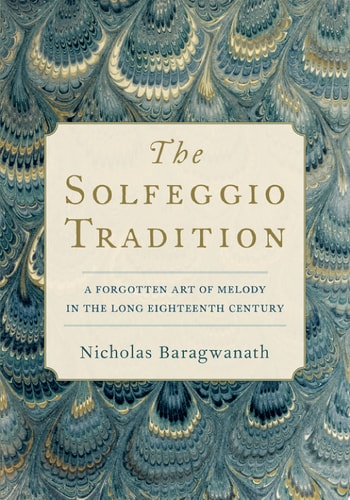
The Solfeggio Tradition
0
0
As an Amazon Associate and affiliate partner, Menrva Books earns from qualifying purchases. Learn more
Author Description
How Did Castrati Manage To Amaze Their Eighteenth-century Audiences By Singing The Same Aria Several Times In Completely Different Ways? And How Could Composers Of The Time Write Operas In A Matter Of Days? The Secret Lies In The Solfeggio Tradition, A Music Education Method That Was Fundamental To The Training Of European Musicians Between 1680 And 1830 A Time During Which Professional Musicians Belonged To The Working Class. As Disadvantaged Children In Orphanages Learned The Musical Craft Through Solfeggio Lessons, Many Were Lifted From Poverty, And The Most Successful Were Propelled To Extraordinary Heights Of Fame And Fortune. In This First Book On The Solfeggio Tradition, Author Nicholas Baragwanath Draws On Over A Thousand Manuscript Sources To Reconstruct How Professionals Became Skilled Performers And Composers Who Could Invent And Modify Melodies At Will. By Introducing Some Of The Simplest Exercises In Scales, Leaps, And Cadences That Apprentices Would Have Encountered, This Book Allows Readers To Retrace The Steps Of Solfeggio Training And Learn To Generate Melody By 'speaking' It Like An Eighteenth-century Musician. As It Takes Readers On A Fascinating Journey Through The Fundamentals Of Music Education In The Eighteenth Century, This Book Uncovers A Forgotten Art Of Melody That Revolutionizes Our Understanding Of The History Of Music Pedagogy.
Menrva's Summary
THE THESIS
How did the pedagogical framework of the solfeggio tradition enable eighteenth-century musicians to master complex improvisation and rapid composition? Nicholas Baragwanath, a scholar of music history, investigates the training methods that defined European musical education between 1680 and 1830. By analyzing over a thousand manuscript sources, the author argues that solfeggio was not merely a vocal exercise but a comprehensive system that allowed working-class orphans to develop sophisticated melodic fluency and professional compositional skills.
THE SCOPE MAP
What You Will Find
- Historical analysis of European music education practices from 1680 to 1830.
- Reconstruction of specific exercises involving scales, leaps, and cadences used by apprentices.
- Examination of over one thousand primary manuscript sources documenting pedagogical techniques.
- Exploration of the socio-economic impact of musical training on disadvantaged children in orphanages.
THE AUTHORITY PERSPECTIVE
Experts identify this work as a significant contribution to the history of music pedagogy, noting its success in demystifying the improvisational capabilities of historical performers. Readers frequently highlight the technical density of the exercises, which serve as a practical guide for those seeking to understand the mechanics of eighteenth-century melodic invention.
Page Count:
288
Publication Date:
2020-01-01
Publisher:
Oxford University Press
ISBN-10:
019751409X
ISBN-13:
9780197514092
Music
Education
Music History
Eighteenth Century
Music theory
Pedagogy
Community Tags
Other Editions(2)
Similar Books