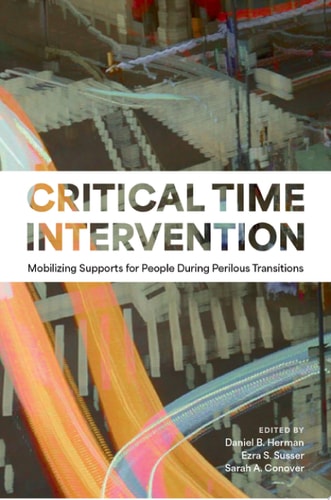
Critical Time Intervention: Mobilizing Supports for People During Perilous Transitions
0
0
As an Amazon Associate and affiliate partner, Menrva Books earns from qualifying purchases. Learn more
Author Description
This Chapter Describes The Rationale, Initial Specification, And Testing Of Cti In Two Randomized Trials With Unhoused Men And Women Following Discharge From Institutional Settings In New York. Through Our Decade Of Work In The Nascent Homelessness Services Sector, We Observed That While Considerable Attention Had So Far Rightfully Focused On Designing Innovative Outreach Approaches Intended To Successfully Engage Homeless Persons On The Streets And Shelters, Few Focused Systematically On The Transition To Community Care. While Engagement And Treatment Programs Must Effectively Build Close, Trusting Relationships With Clients, This Often Leads To Clients Depending On Program Staff To Meet A Wide Range Of Needs. In Contrast, The Transition Process Must Help Clients Move Toward Greater Autonomy And Reliance On Other Sources Of Support In The Community. This Underdeveloped Stage Of Service Delivery Became The Focus Of The New Cti Model.
Menrva's Summary
THE THESIS
This book investigates the efficacy of Critical Time Intervention (CTI) as a structured framework for supporting individuals transitioning from institutional settings to community-based care. The authors, Daniel B. Herman, Ezra S. Susser, and Sarah Conover, draw upon a decade of research within the homelessness services sector to address the critical gap in service delivery during the post-discharge period. By analyzing data from two randomized trials involving unhoused populations in New York, they argue that a time-limited, phased approach is necessary to foster client autonomy and reduce dependency on institutional staff.
THE SCOPE MAP
What You Will Find
- Longitudinal data from two randomized controlled trials conducted in New York City.
- A detailed specification of the CTI model and its phased implementation strategy.
- Analysis of the transition period between institutional discharge and community integration.
- Methodologies for shifting client reliance from program staff to sustainable community support networks.
THE AUTHORITY PERSPECTIVE
Experts in social work and public health recognize this text as a foundational resource for understanding the mechanics of transitional care for vulnerable populations. Practitioners frequently cite the model's emphasis on autonomy as a critical component for successful long-term community integration.
Page Count:
200
Publication Date:
2024-10-24
Publisher:
Oxford University Press
ISBN-10:
0197518117
ISBN-13:
9780197518113
Psychology
Politics
Sociology
Social Work
Mental Health
Public Health