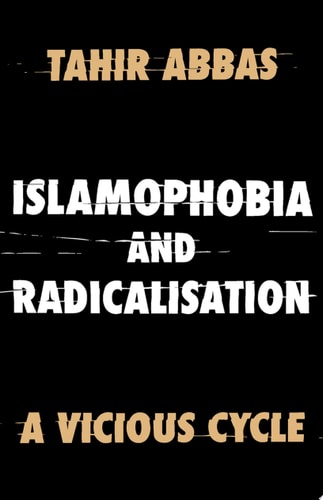
Islamophobia and Radicalisation: A Vicious Cycle
0
0
As an Amazon Associate and affiliate partner, Menrva Books earns from qualifying purchases. Learn more
Author Description
Since the 1970s, there have been three challenges to traditional, homogeneous "national" identities across the Western world: political and socioeconomic inequality; neoliberal globalization; and more diverse, multicultural societies. As in the US and elsewhere in Western Europe, the decline of an old, masculinized national identity has now begun to open a new, dark era for Britain. Ever since the "war on terror" was added to the mix, "others" in Britain have been brutally demonized. Muslims, routinely presented as the source of society's ills, are subjected to both symbolic and actual violence. Deep-seated and structurally racialized norms amplify the isolation and alienation impeding Muslim integration. Both these "left-behind" Muslims and white-British groups who perceive themselves as the true nation are under pressure from ongoing geopolitical concerns in the Muslim world, as well as widening divisions at home. Tahir Abbas argues that, in this context, the symbiotic intersections between Islamophobia and radicalization intensify and expand. His book is a warning of the world that results: a rise in hate crime, the institutionalization of Islamophobia, and the normalization of war and conflict.
Menrva's Summary
THE THESIS
This book investigates the symbiotic relationship between Islamophobia and radicalization within the context of contemporary British society. Tahir Abbas, a professor of sociology, utilizes a framework of structural inequality and national identity crisis to analyze how the demonization of Muslim communities contributes to social alienation. He argues that the intersection of neoliberal globalization and the post-9/11 political climate has institutionalized exclusionary practices that exacerbate both domestic hate crime and geopolitical instability.
THE SCOPE MAP
What You Will Find
- Analysis of the decline of traditional, masculinized national identities in Western nations.
- Examination of the structural and symbolic violence directed toward Muslim populations in Britain.
- Discussion of the impact of neoliberal globalization and socioeconomic inequality on social cohesion.
- Evaluation of the feedback loop between state-sanctioned Islamophobia and the rise of radicalization.
THE AUTHORITY PERSPECTIVE
Experts recognize this work as a critical contribution to the study of contemporary British race relations and the sociology of religion. Readers frequently note the academic rigor and the sobering nature of the author's analysis regarding institutionalized prejudice.
Page Count:
277
Publication Date:
2019-01-01
Publisher:
Oxford University Press
ISBN-10:
0197513921
ISBN-13:
9780197513927
Islamophobia
Race Relations
Social Issues
Sociology
Radicalization
Public Policy
Community Tags
Similar Books