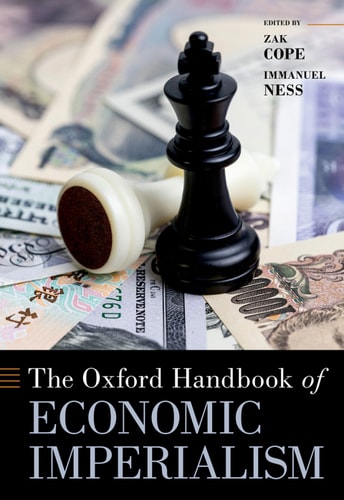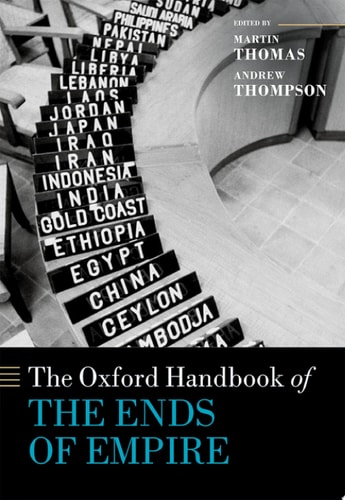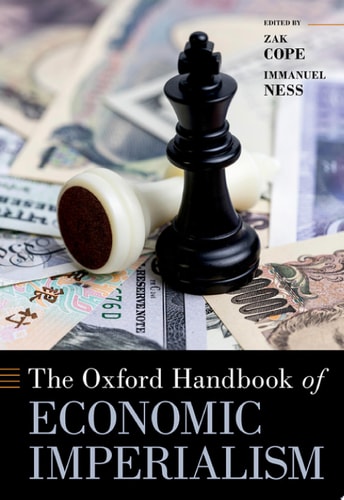
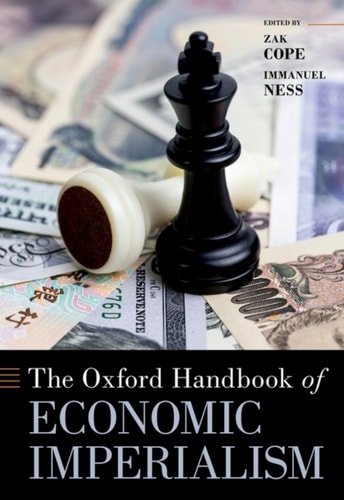
The Oxford Handbook of Economic Imperialism
0
0
As an Amazon Associate and affiliate partner, Menrva Books earns from qualifying purchases. Learn more
Author Description
Imperialism has resurfaced as an area of scholarly study in recent years, particularly among those concerned with political economy and international relations. Do countries engage in foreign intervention and "just war" because they feel a responsibility toward the international community? Or are these actions rationalizations for the pursuit of commercial, industrial, financial, and military interests? Around the world, economies, cultures, politics, laws, and nation-states are profoundly shaped by imperialism, both historical and contemporary.Including thirty-four chapters written by academics and experts in the field of international political economy, The Oxford Handbook of Economic Imperialism presents comprehensive theoretical, empirical, and historical accounts of economic imperialism from the early modern age to the present. Over the course of three sections, the Handbook looks at the theory and concepts behind the study of imperialism, the international political economy of imperialism, and imperialism in various regions of the world today. In so doing, the Handbook demonstrates the persistence of economic imperialism in today's postcolonial world, and the enduring control wielded by great powers even after the end of formal empire. Moreover, the Handbook reveals how emerging powers are expanding economic control in new geographic and geopolitical contexts, and highlights the significance of economic imperialism in the structures, relations, processes, and ideas that sustain poverty and conflict worldwide.
Menrva's Summary
THE THESIS
This volume investigates whether contemporary foreign interventions and international policies are driven by humanitarian responsibility or by the calculated pursuit of commercial, industrial, and military interests. Edited by Dr. Immanuel Ness and Zak Cope, the handbook synthesizes contributions from thirty-four scholars to provide a rigorous theoretical and empirical framework for understanding economic imperialism. The text challenges the notion that formal empire has ended, arguing instead that economic control remains a primary driver of global poverty and conflict.
THE SCOPE MAP
What You Will Find
- Theoretical and conceptual foundations of imperialism from the early modern period to the present.
- Analysis of the international political economy and the mechanisms of global power projection.
- Regional case studies detailing the expansion of economic control by both established and emerging powers.
- Examination of the structural processes and ideas that sustain modern geopolitical inequality.
THE AUTHORITY PERSPECTIVE
Experts identify this handbook as a comprehensive reference work for scholars of international political economy and postcolonial studies. Readers frequently note the academic density of the prose and the breadth of the multidisciplinary research presented by the contributors.
Page Count:
696
Publication Date:
2022-03-08
Publisher:
Oxford University Press
ISBN-10:
0197527086
ISBN-13:
9780197527085
History
Economics
International relations
Imperialism
Community Tags
Other Editions(2)
Similar Books