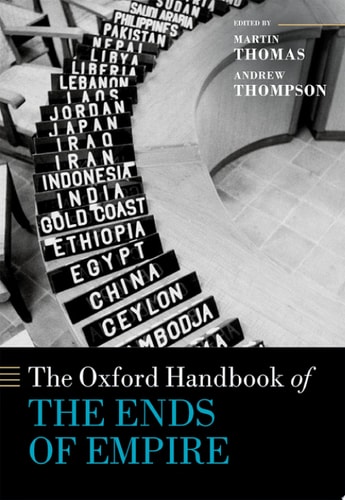
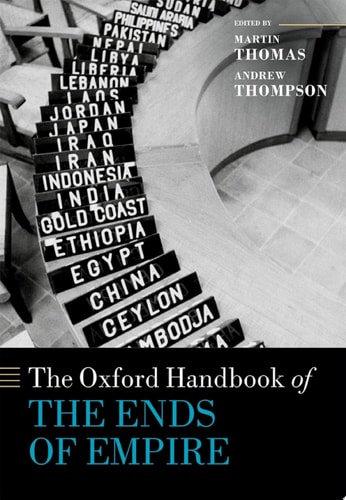
The Oxford Handbook of the Ends of Empire
0
0
As an Amazon Associate and affiliate partner, Menrva Books earns from qualifying purchases. Learn more
Author Description
The Oxford Handbook Of The Ends Of Empire Offers The Most Comprehensive Treatment Of The Causes, Course, And Consequences Of The Ends Of Empire In The Twentieth Century. The Volume's Contributors Convey The Global Reach Of Decolonization, With Chapters Analysing The Empires Of Western Europe, Eastern Europe, China And Japan. The Handbook Combines Broad, Regional Treatments Of Decolonization With Chapter Contributions Constructed Around Particular Themes Or Social Issues. It Considers How The History Of Decolonization Is Being Rethought As A Result Of The Rise Of The 'new' Imperial History, And Its Emphasis On Race, Gender, And Culture, As Well As The More Recent Growth Of Interest In Histories Of Globalization, Transnational History, And Histories Of Migration And Diaspora, Humanitarianism And Development, And Human Rights. The Handbook, In Other Words, Seeks To Identify The Processes And Commonalities Of Experience That Make Decolonization A Unique Historical Phenomenon With A Lasting Resonance. In Light Of Decades Of Historical And Social Scientific Scholarship On Modernization, Dependency, Neo-colonialism, 'failed State' Architectures And Post-colonial Conflict, The Obvious Question That Begs Itself Is 'when Did Empires Actually End?' In Seeking To Unravel This Most Basic Dilemma The Handbook Explores The Relationship Between The Study Of Decolonization And The Study Of Globalization. It Connects Histories Of The Late-colonial And Post-colonial Worlds, And Considers The Legacies Of Empire In European And Formerly Colonised Societies.
Menrva's Summary
THE THESIS
This volume investigates the complex temporal and structural boundaries of imperial collapse, questioning when empires truly end in the context of twentieth-century global history. Editors Andrew Thompson and Martin Thomas curate a collection of scholarly contributions that synthesize the causes, trajectories, and enduring consequences of decolonization. The text employs a multidisciplinary framework, integrating traditional political history with contemporary analytical lenses such as the 'new' imperial history, transnational studies, and migration theory to re-evaluate the transition from colonial to post-colonial states.
THE SCOPE MAP
What You Will Find
- Comparative analyses of Western European, Eastern European, Chinese, and Japanese imperial dissolution.
- Thematic explorations of race, gender, culture, humanitarianism, and human rights within decolonization processes.
- Integration of globalization theory and post-colonial conflict studies.
Scope Limits
- The volume focuses primarily on the twentieth century and does not provide an exhaustive history of pre-modern imperial decline.
- It does not attempt to provide a singular, unified theory of decolonization, acknowledging instead the diverse regional experiences.
THE AUTHORITY PERSPECTIVE
Scholars and historians recognize this handbook as a comprehensive reference work that successfully bridges the gap between regional case studies and broader global historical trends. Readers frequently note the academic density of the prose, which serves as a foundational resource for advanced students and researchers in the field of imperial and post-colonial studies.
Page Count:
832
Publication Date:
2018-01-01
Publisher:
Oxford University Press
ISBN-10:
0191022144
ISBN-13:
9780191022142
History
Imperialism
Global History
International relations
Community Tags
Other Editions(3)

Similar Books


Reader Comments
Share Your Thoughts
No comments yet. Be the first to share your thoughts!