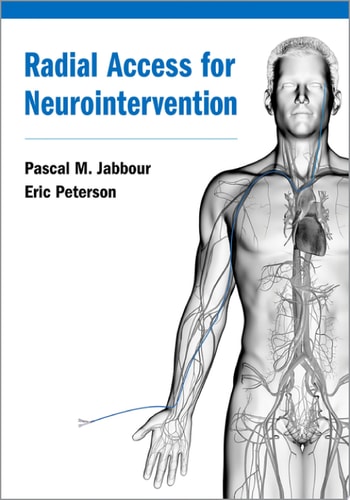
Radial Access for Neurointervention
0
0
As an Amazon Associate and affiliate partner, Menrva Books earns from qualifying purchases. Learn more
Author Description
For the longest time, neuroendovascular procedures have been done through the femoral artery (TFA) located in the thigh and groin region. Over the last decade, interventional cardiologists have pioneered a newer approach: by utilizing the radial artery in the wrist to access the arterial system, a new procedure has been employed: radial access. Numerous studies and randomized controlled trials have demonstrated this to be a safer way of performing endovascular procedures, and a majority of the interventional cardiac procedures are performed via radial access.The neurointerventional community, however, has been slow to adopt this innovation. The radial access innovation is finally making its way to the neurointerventional community. Radial Access for Neurointervention has all the literature supporting illustrating how radial access is useful to the neuro community. Detailed chapters describe the techniques of radial access including positioning the patient on the table, driving the microcatheters intracranially, aneurysms treatment, AVM/AVF embolizations, complications management, and more. Readily enhanced throughout with pictures and movies, this first-of-its-kind book will guide neurointerventionalists to transition their practices to radial first.
Menrva's Summary
THE THESIS
This book investigates the clinical transition from femoral artery access to radial artery access for neuroendovascular procedures. The author presents a comprehensive argument for adopting radial access as the standard of care in neurointervention, drawing upon existing literature and randomized controlled trials that demonstrate improved safety profiles. By detailing the technical shift required for this procedure, the text serves as a practical manual for neurointerventionalists seeking to modernize their surgical approach.
THE SCOPE MAP
What You Will Find
- Technical protocols for patient positioning and arterial access in the wrist.
- Step-by-step guidance for intracranial microcatheter navigation.
- Clinical methodologies for treating aneurysms and AVM/AVF embolizations.
- Strategies for managing complications specific to the radial approach.
- Visual documentation including clinical imagery and procedural video content.
THE AUTHORITY PERSPECTIVE
Experts identify this work as the primary foundational text for neurointerventionalists transitioning to radial-first practices. Readers frequently note the technical density of the prose and the practical utility of the included procedural media.
Page Count:
157
Publication Date:
2021-01-01
Publisher:
Oxford University Press
ISBN-10:
0197524192
ISBN-13:
9780197524190
Surgery
Reference
Neurology
Allied Health
Medical
Cardiology
Community Tags
Similar Books