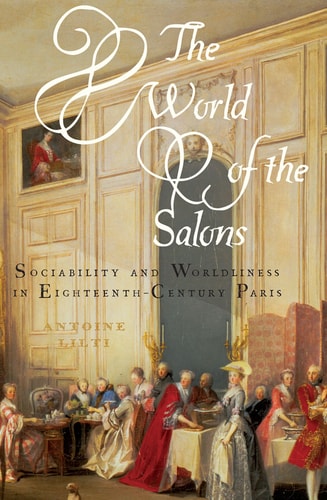
The World of the Salons: Sociability and Worldliness in Eighteenth-Century Paris
0
0
As an Amazon Associate and affiliate partner, Menrva Books earns from qualifying purchases. Learn more
Author Description
The world of the eighteenth-century salon has long been lauded as a meritocratic setting where writers, philosophers, and women created the Enlightenment. In The World of the Salons, historian Antoine Lilti proposes a fresh interpretation of salons in eighteenth-century Paris. Drawing on cultural history, social history, and the history of literature, he challenges the commonly accepted vision of salons as literary circles that were part of the Republic of Letters.Lilti argues, instead, that salons were institutions of worldly sociability that helped shape "the world" (le monde) and high society. They were essential places where the aristocratic elites of the capital met and interacted with literary figures. Attending them required a mastery of the codes of polite conversation. There news circulated and personal reputations were made and lost. As opposed to the salon being a realm separate from the court at Versailles, it was a site where elites gained enough influence to forge marital alliances, secure government appointments or pensions, and win over royal censors. These discussion circles were part of refined society, not public opinion, and those writers who gained mass appeal were shunned by salon-goers.For those who think they know what the salon meant in early modern European culture, politics, and intellectual circles, Antoine Lilti's The World of the Salons offers an important corrective of what went on behind the closed doors of the French salons.
Menrva's Summary
THE THESIS
This book investigates the true function of eighteenth-century Parisian salons, challenging the traditional view that they were purely intellectual hubs of the Enlightenment. Historian Antoine Lilti utilizes a multidisciplinary approach, synthesizing cultural, social, and literary history to reframe these spaces. He argues that salons were primarily institutions of worldly sociability designed to facilitate elite networking, marital alliances, and political maneuvering rather than serving as democratic forums for public opinion.
THE SCOPE MAP
What You Will Find
- Analysis of the social codes and etiquette required for participation in high society.
- Examination of the intersection between aristocratic power and literary influence.
- Evidence drawn from historical records regarding government appointments, pensions, and royal censorship.
- A re-evaluation of the relationship between the Parisian salon culture and the court at Versailles.
THE AUTHORITY PERSPECTIVE
Scholars recognize this work as a significant revisionist study that dismantles long-standing myths regarding the intellectual origins of the French Enlightenment. Readers frequently note the academic density of the prose, which provides a rigorous, evidence-based look at the mechanics of early modern French social life.
Page Count:
344
Publication Date:
2020-07-01
Publisher:
Oxford University Press
ISBN-10:
0197533604
ISBN-13:
9780197533604
History
Enlightenment
Conduct Of Life
Paris France
Upper Class
Social Life
Sociology
European History
Social History
French History
Cultural History
Salons
Community Tags
Similar Books