No Conquest, No Defeat: Iran's National Security Strategy
0
0
As an Amazon Associate and affiliate partner, Menrva Books earns from qualifying purchases. Learn more
Author Description
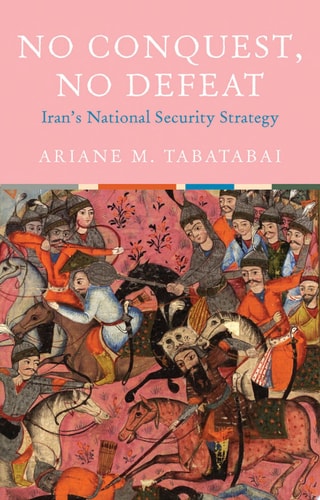
In early 2019, the Islamic Republic of Iran marked its fortieth anniversary, despite decades of isolation, political pressure, sanctions and war. Observers of its security policies continue to try and make sense of this unlikely endurance. Some view the regime as a purely rational actor, whose national security decisions and military affairs are shaped by the same considerations as in other states. Others believe that it is ideology driving Tehran's strategy. Either way, virtually everyone agrees that the mullahs' policies are fundamentally different from those pursued by their monarchical predecessors.No Conquest, No Defeat offers a historically grounded overview of Iranian national security. Tabatabai argues that the Islamic Republic is neither completely rational nor purely ideological. Rather, its national security policy today is largely shaped by its strategic culture, a product of the country's historical experiences of war and peace. As a result, Iranian strategic thinking is perhaps best characterized by its dynamic yet resilient nature, one that is continually evolving. As the Islamic Republic enters its fifth decade, this book sheds new light on Iran's controversial nuclear and missile programs and its involvement in Afghanistan, Iraq, Lebanon, Syria and Yemen.
Menrva's Summary
THE THESIS
This book investigates how Iran's historical experiences and strategic culture shape its national security policy, challenging the binary view that the regime is driven solely by rationalism or ideology. Ariane M. Tabatabai, a scholar specializing in Middle Eastern security, utilizes historical analysis and contemporary policy review to argue that Iran's endurance is rooted in a resilient, evolving strategic framework. By examining the transition from monarchical rule to the Islamic Republic, the author provides a nuanced perspective on how Tehran navigates its regional and global interests.
THE SCOPE MAP
What You Will Find
- Historical analysis of Iranian security policy from the pre-revolutionary era to the present.
- Examination of Iran's nuclear and missile development programs.
- Case studies of Iranian involvement in Afghanistan, Iraq, Lebanon, Syria, and Yemen.
- A framework for understanding 'strategic culture' as a driver of state behavior.
THE AUTHORITY PERSPECTIVE
Experts identify this work as a significant contribution to the study of Iranian foreign policy, noting its ability to move beyond simplistic characterizations of the regime. Readers frequently highlight the clarity of the author's argument and the depth of the historical context provided for current geopolitical tensions.
Page Count:
400
Publication Date:
2020-10-15
Publisher:
Oxford University Press
ISBN-10:
0197534600
ISBN-13:
9780197534601
History
Politics
Iran
Geopolitics
Middle East
Military Strategy
World politics
New Used & Rental Textbooks
Specific Topics
International relations
Middle Eastern
Community Tags
Similar Books