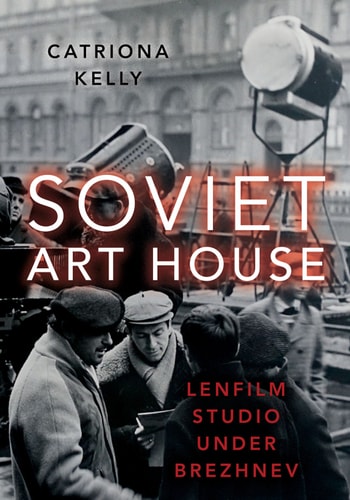
Soviet Art House: Lenfilm Studio under Brezhnev
0
0
As an Amazon Associate and affiliate partner, Menrva Books earns from qualifying purchases. Learn more
Author Description
Its unique ability to sway the masses has led many observers to consider cinema the artform with the greatest political force. The images it produces can bolster leaders or contribute to their undoing. Soviet filmmakers often had to face great obstacles as they struggled to make art in an authoritarian society that put them not only under ideological pressure but also imposed rigid economic constraints on the industry. But while the Brezhnev era of Soviet filmmaking is often depicted as a period of great repression, Soviet Art House reveals that the films made at the prestigious Lenfilm studio in this period were far more imaginative than is usually suspected.In this pioneering study of a Soviet film studio, author Catriona Kelly delves into previously unpublished archival documents and interviews, memoirs, and the films themselves to illuminate the ideological, economic, and aesthetic dimensions of filmmaking in the Brezhnev era. She argues that especially the young filmmakers who joined the studio after its restructuring in 1961 revitalized its output and helped establish Leningrad as a leading center of oppositional art. This unique insight into Soviet film production shows not only the inner workings of Soviet institutions before the system collapsed but also traces how filmmakers tirelessly dodged and negotiated contradictory demands to create sophisticated and highly original movies.
Menrva's Summary
THE THESIS
This book investigates how the Lenfilm studio maintained creative output and artistic innovation within the restrictive ideological and economic framework of the Soviet Union during the Brezhnev era. Catriona Kelly, a scholar of Russian culture, utilizes a combination of previously unpublished archival documents, personal interviews, and memoirs to challenge the perception of the Brezhnev period as one of total artistic stagnation. She argues that a new generation of filmmakers, arriving after the 1961 restructuring, successfully navigated institutional pressures to produce sophisticated, oppositional cinema that defined Leningrad as a hub of creative resistance.
THE SCOPE MAP
What You Will Find
- Analysis of the ideological and economic constraints imposed on Soviet film production.
- Examination of the 1961 Lenfilm studio restructuring and its long-term impact on output.
- Primary source research including archival documents, memoirs, and filmmaker interviews.
- Case studies of specific films that demonstrate aesthetic innovation under authoritarian oversight.
THE AUTHORITY PERSPECTIVE
Experts recognize this work as a significant contribution to the study of Soviet cultural institutions and the mechanics of state-sponsored art. Readers frequently note the academic rigor of the text and its success in providing a nuanced view of the creative negotiations occurring within the Lenfilm studio.
Page Count:
534
Publication Date:
2021-01-01
Publisher:
Oxford University Press
ISBN-10:
0197548393
ISBN-13:
9780197548394
History
Soviet Studies
Telecommunications
European History
Modern History
Art History
Trades & Technology
Film & Video
Film Studies
Technology & Engineering
Community Tags
Other Editions(2)
Similar Books