From Perception To Pleasure
0
0
As an Amazon Associate and affiliate partner, Menrva Books earns from qualifying purchases. Learn more
Author Description
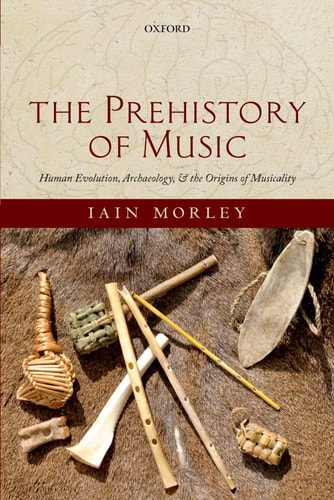
Our Species Has Been Making Music Most Likely For As Long As We've Been Human. It Seems To Be An Indelible A Part Of Us. The Oldest Known Musical Instruments Date Back To The Upper Paleolithic Period, Some 40,000 Years Ago. Among The Most Intriguing Of These Are Delicate Bone Flutes, Seen In Figure 1.1, Found In What Is Now Southern Germany. (conard Et Al. 2009). These Discoveries Testify To The Advanced Technology That Our Ancestors Applied To Create Music: The Finger Holes Are Carefully Bevelled To Allow The Musician's Fingers To Make A Tight Seal; And The Distances Between The Holes Appear To Have Been Precisely Measured, Perhaps To Correspond To A Specific Musical Scale. This Time Period Corresponds To The Last Glaciation Episode In The Northern Hemisphere -- Life Could Not Have Been Easy For People Living At That Time. Yet Time, Energy, And The Skills Of Craftworkers Were Expended For Making Abstract Sounds Of The Least Use... To Daily Habits Of Life. So, Music Must Have Been Very Meaningful And Important For Them. Why Would That Be?-- Provided By Publisher.
Menrva's Summary
THE THESIS
This book investigates the evolutionary and neurological origins of music to explain why humans dedicate significant time and cognitive resources to creating and consuming abstract auditory patterns. Robert J. Zatorre, a prominent neuroscientist specializing in the auditory system, synthesizes archaeological evidence with modern brain imaging data. He argues that music is not merely a cultural byproduct but an integral component of human cognition that interacts with the brain's reward and sensory processing centers.
THE SCOPE MAP
What You Will Find
- Analysis of Paleolithic musical artifacts and their implications for early human social behavior.
- Examination of the neurobiological mechanisms that translate sound frequencies into emotional pleasure.
- Discussion of the intersection between auditory processing and the brain's dopamine-mediated reward systems.
- Theoretical frameworks regarding the evolutionary utility of music in human survival and social bonding.
THE AUTHORITY PERSPECTIVE
Experts in the field of music cognition recognize this work as a significant contribution to the understanding of how the brain processes aesthetic stimuli. Readers frequently note the balance between accessible scientific explanation and rigorous academic inquiry into the nature of human auditory experience.
Page Count:
0
Publication Date:
2024-01-01
Publisher:
New York : Oxford University Press,
ISBN-10:
0197558313
ISBN-13:
9780197558317
Psychology
Science
Psychological aspects
Neuroscience
Pleasure
Musicology
Evolutionary Biology
Community Tags
Similar Books