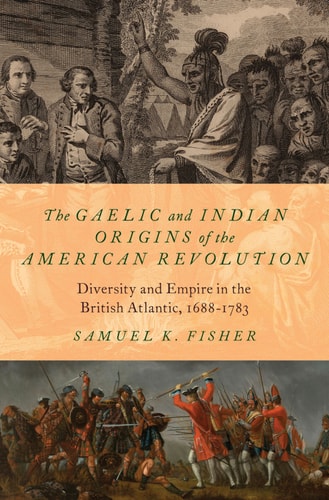
The Gaelic and Indian Origins of the American Revolution: Diversity and Empire in the British Atlantic, 1688-1783
0
0
As an Amazon Associate and affiliate partner, Menrva Books earns from qualifying purchases. Learn more
Author Description
How did an unlikely group of peoples--Irish-speaking Catholics, Scottish Highlanders, and American Indians--play an even unlikelier role in the origins of the American Revolution? Drawing on little-used sources in Irish and Scottish Gaelic, The Gaelic and Indian Origins of the American Revolution places these typically marginalized peoples in Ireland, Scotland, and North America at the center of a larger drama of imperial reform and revolution. Gaelic and Indian peoples experiencing colonization in the eighteenth-century British empire fought back by building relationships with the king and imperial officials. In doing so, they created a more inclusive empire and triggered conflict between the imperial state and formerly privileged provincial Britons: Irish Protestants, Scottish whigs, and American colonists. The American Revolution was only one aspect of this larger conflict between inclusive empire and the exclusionary patriots within the British empire. In fact, Britons had argued about these questions since the Glorious Revolution of 1688, when revolutionaries had dethroned James II as they accused him of plotting to employ savage Gaelic and Indian enemies in a tyrranical plot against liberty. This was the same argument the American revolutionaries--and their sympathizers in England, Scotland, and Ireland--used against George III. Ironically, however, it was Gaelic and Indian peoples, not kings, who had pushed the empire in inclusive directions. In doing so they pushed the American patriots towards revolution. This novel account argues that Americans' racial dilemmas were not new nor distinctively American but instead the awkward legacies of a more complex imperial history. By showcasing how Gaelic and Indian peoples challenged the British empire--and in the process convinced American colonists to leave it--Samuel K. Fisher offers a new way of understanding the American Revolution and its relevance for our own times.
Menrva's Summary
THE THESIS
This work investigates how marginalized Gaelic and Indigenous populations influenced the structural collapse of the British Empire and the subsequent onset of the American Revolution. Samuel K. Fisher utilizes previously overlooked primary sources written in Irish and Scottish Gaelic to challenge traditional narratives of the American Revolution. He argues that the revolution was not merely a conflict between colonists and the crown, but a reaction by exclusionary provincial Britons against an increasingly inclusive imperial policy that empowered Gaelic and Indian subjects. By tracing these tensions back to the Glorious Revolution of 1688, Fisher posits that the racial and political dilemmas of the American founding were inherited from a broader, more complex imperial history.
THE SCOPE MAP
What You Will Find
- An analysis of imperial reform and colonial resistance spanning from 1688 to 1783.
- A methodology incorporating linguistic evidence from Irish and Scottish Gaelic primary sources.
- Case studies of interactions between the British crown and marginalized groups in Ireland, Scotland, and North America.
- A re-evaluation of the ideological origins of American patriotism and its relationship to exclusionary racial politics.
THE AUTHORITY PERSPECTIVE
Historians recognize this text for its contribution to Atlantic history by centering non-traditional actors in the narrative of imperial decline. Scholars frequently note the density of the archival research and the author's ability to synthesize disparate regional histories into a cohesive argument regarding the nature of the British Empire.
Page Count:
335
Publication Date:
2022-01-01
Publisher:
Oxford University Press
ISBN-10:
0197555861
ISBN-13:
9780197555866
History
British History
Colonial History
Imperialism
American History
Community Tags
Similar Books