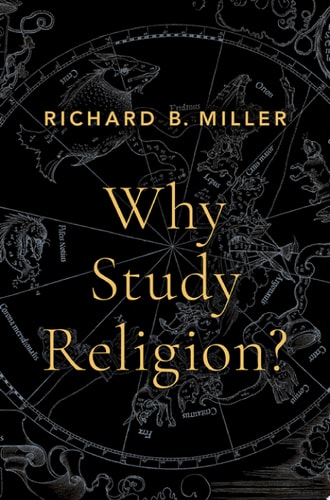
Why Study Religion?
0
0
As an Amazon Associate and affiliate partner, Menrva Books earns from qualifying purchases. Learn more
Author Description
Can the study of religion be justified? Scholarship in religion, especially work in "theory and method," is preoccupied with matters of research procedure and thus inarticulate about the goals that motivate scholarship in the field. For that reason, the field suffers from a crisis of rationale. Richard B. Miller identifies six prevailing methodologies in the field, and then offers an alternative framework for thinking about the purposes of the discipline. Shadowing these various methodologies, he notes, is a Weberian scientific ideal for studying religion, one that aspires to value-neutrality. This ideal fortifies a "regime of truth" that undercuts efforts to think normatively and teleologically about the field's purpose and value. Miller's alternative framework, Critical Humanism, theorizes about the ends rather than the means of humanistic scholarship. Why Study Religion? offers an account of humanistic inquiry that is held together by four values: Post-critical Reasoning, Social Criticism, Cross-cultural Fluency, and Environmental Responsibility. Ordered to such purposes, Miller argues, scholars of religion can relax their commitment to matters of methodological procedure and advocate for the value of studying religion. The future of religious studies will depend on how well it can articulate its goals as a basis for motivating scholarship in the field.
Menrva's Summary
THE THESIS
This book investigates the fundamental justification for the academic study of religion in the face of a perceived crisis of rationale within the discipline. Richard B. Miller, a scholar in the field, critiques the current preoccupation with methodological procedure and value-neutrality, which he argues has rendered the discipline inarticulate regarding its own purpose. He proposes an alternative framework, Critical Humanism, which shifts the focus from procedural methodology to the normative and teleological goals of humanistic inquiry.
THE SCOPE MAP
What You Will Find
- An analysis of six prevailing methodologies currently used in religious studies.
- A critique of the Weberian scientific ideal of value-neutrality.
- The introduction of the Critical Humanism framework based on four core values: Post-critical Reasoning, Social Criticism, Cross-cultural Fluency, and Environmental Responsibility.
- A proposal for reorienting the field toward purposeful, goal-oriented scholarship.
THE AUTHORITY PERSPECTIVE
Scholars and students of religious studies frequently cite this work as a significant intervention in the ongoing debate regarding the field's identity and academic legitimacy. Experts highlight the text as a necessary challenge to the dominance of proceduralism in contemporary humanities research.
Page Count:
378
Publication Date:
2021-01-01
Publisher:
Oxford University Press
ISBN-10:
0197566839
ISBN-13:
9780197566831
Philosophy
Religion
Academic
Education
Religion
Cultural Anthropology
Humanities
Community Tags
Similar Books