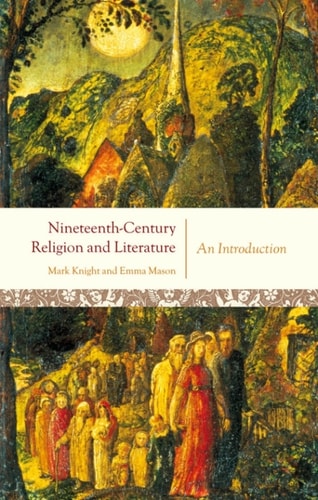
Nineteenth-Century Religion and Literature: An Introduction
0
0
As an Amazon Associate and affiliate partner, Menrva Books earns from qualifying purchases. Learn more
Author Description
Recent scholarship in nineteenth-century literary studies consistently recognizes the profound importance of religion, even as it marginalizes the topic. There are few, if any, challenging yet manageable introductions to religion and literature in the long-nineteenth century, a factor that serves to fuel scholars' neglect of theological issues. This book aims to show how religion, specifically Christianity, is integral to the literature and culture of this period. It provides close readings of popular texts and integrates these with accessible explanations of complex religious ideas. Written by two scholars who have published widely on religion and literature, the book offers a detailed grounding in the main religious movements of the period 1750-1914. The dominant traditions of High Anglicanism, Tractarianism, Evangelicalism and Roman Catholicism are contextualized by preceding chapters addressing dissenting culture (primarily Presbyterianism, Methodism, Unitarianism and Quakerism), and the question of secularization is considered in the light of the diversity and capacity for renewal within the Christian faith. Throughout the book the authors untangle theological and church debates in a manner that highlights the privileged relationship between religion and literature in the period. The book also gives readers a language to approach and articulate their own 'religious' readings of texts, texts that are often concerned with slippery subjects such as the divine, the non-material and the nature of religious experience. Refusing to shut down religious debate by offering only narrow or fixed definitions of Christian traditions, the book also questions the demarcation of sacred material from secular, as well as connecting the vitality of religion in the period to a broader literary culture.
Menrva's Summary
THE THESIS
This book investigates the integral role of Christian religious traditions in shaping the literature and culture of the long nineteenth century, spanning from 1750 to 1914. Authors Emma Mason and Mark Knight, both established scholars in the field, address the academic tendency to marginalize theological issues in literary studies. They provide a foundational framework that connects complex religious movements with popular literary texts, arguing that religion remains a vital, rather than peripheral, component of the period's intellectual life.
THE SCOPE MAP
What You Will Find
- Analysis of major religious movements including High Anglicanism, Tractarianism, Evangelicalism, and Roman Catholicism.
- Examination of dissenting traditions such as Presbyterianism, Methodism, Unitarianism, and Quakerism.
- Methodologies for interpreting religious themes like the divine and the non-material in literary texts.
Scope Limits
- The text focuses primarily on Christian traditions and does not provide an exhaustive survey of non-Christian religious influences during the period.
- The analysis is bounded by the timeframe of 1750 to 1914.
THE AUTHORITY PERSPECTIVE
Experts identify this work as a foundational introduction for students and scholars seeking to bridge the gap between theological history and literary analysis. Readers frequently note the clarity with which the authors explain complex church debates, making it an accessible resource for those navigating the intersection of faith and nineteenth-century letters.
Page Count:
240
Publication Date:
2007-01-01
Publisher:
Oxford University Press
ISBN-10:
019153501X
ISBN-13:
9780191535017
Religion
Religion and literature
Literary Criticism
English & College Success
Christianity
Nineteenth century
English
Academic
Community Tags
Other Editions(2)

Similar Books
Reader Comments
Share Your Thoughts
No comments yet. Be the first to share your thoughts!