
Social Goodness
0
0
As an Amazon Associate and affiliate partner, Menrva Books earns from qualifying purchases. Learn more
Author Description
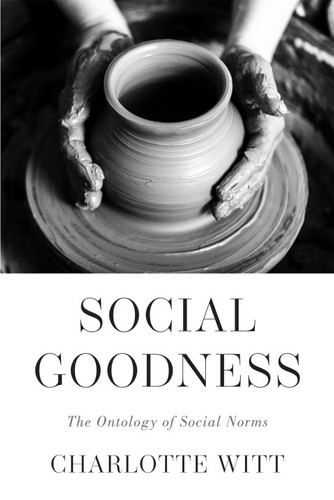
Social Goodness Presents An Original, Externalist Answer To The Question Of The Source Or Origin Of Social Role Normativity. Rather Than Ground Social Normativity In The Attitudes Of Persons, The Book Argues For An Externalism That Roots Social Role Normativity In The Social World Itself, In Its Positions, Institutions, And Larger Architecture. The Core Insight Of Externalism Is That The Function Or Structural Feature Of An Enterprise Or Activity Can Bring With It Normative Demands Quite Independently Of The Attitudes Of Those Who Engage With It. According To The Artisanal Model, Just As A Carpenter, A Ceramicist Or A Chef Is Responsive To And Evaluable Under A Set Of Artisanal Norms Or Techniques, So Too Is A Mother And Or An Academic Or A President. The Source Of Normativity Is The Technique/expertise, And These Are Independent Of The Preferences, Endorsements Or Recognitive Attitudes Of Individuals. The Artisanal Model For Social Role Normativity Has Resources To Explain Both The Stickiness Or Persistence Of Social Norms, And Our Ability To Criticize Existing Norms And To Engage In Normative Self-creation-to Create New Normative Selves. The Artisanal Model Also Has Resources To Capture And Express The Social Situatedness, Locality And Materiality Of Social Roles. The Relational Ontology Of Social Roles, Implicit In The Artisanal Model, Provides A Useful Frame To Consider Both Hierarchical And Oppressive Social Relations
Menrva's Summary
THE THESIS
This book investigates the source of social role normativity by proposing an externalist framework that locates normative demands within the structure of the social world rather than individual attitudes. Charlotte Witt, a prominent philosopher, utilizes an artisanal model to argue that social roles—such as those of a mother, academic, or president—are governed by objective techniques and structural requirements. By shifting the focus from internal psychological states to the external architecture of institutions, the author provides a new lens for understanding how social norms persist, evolve, and facilitate normative self-creation.
THE SCOPE MAP
What You Will Find
- An externalist theory of social role normativity grounded in institutional architecture.
- The Artisanal Model as a methodology for evaluating social roles through functional expertise.
- Analysis of how relational ontology addresses hierarchical and oppressive social structures.
- Philosophical arguments regarding the independence of normative demands from individual preferences.
THE AUTHORITY PERSPECTIVE
Scholars in social ontology and ethics view this work as a significant contribution to the debate surrounding the origins of social norms. Readers frequently note the philosophical rigor of the prose, which provides a structured alternative to traditional internalist accounts of social roles.
Page Count:
0
Publication Date:
2023-01-01
Publisher:
New York, NY : Oxford University Press,
ISBN-10:
0197574807
ISBN-13:
9780197574805
Philosophy
Ethics
Sociology
Social Theory
Social Philosophy
Social Norms
Community Tags
Other Editions(2)
Similar Books