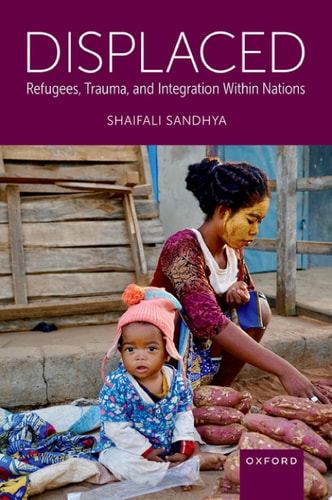
Displaced: Refugees, Trauma, and Integration Within Nations
0
0
As an Amazon Associate and affiliate partner, Menrva Books earns from qualifying purchases. Learn more
Author Description
Armed conflicts, natural disasters, poverty, and the pandemic have forced over 117 million people to abandon their homes and heritage. Surging pushbacks, protection gaps, and deportations precipitate refugees' exclusion from equitable economic, social, cultural, political, and reproductive rights, amplifying suffering. As such, displaced communities will shoulder a silent epidemic of posttraumatic stress as well as other debilitating ailments, which are often passed down to future generations. Host nations to which refugees flee do not always associate their psychological well-being with future self-sufficiency and potential for contributions to society, and humanitarian organizations seldom prioritize improved mental health outcomes for refugees. The toll of failing to elevate the importance of refugee mental health is immense, at both individual and societal scales.Drawing on firsthand accounts and empirical research, as well as interviews with government officials, agency directors, and refugee camp managers, Displaced explores the psychological trauma of refugees, the complex interplay between trauma and integration into host nations, and the consequences of failing to attend to refugee mental health as part of comprehensive resettlement initiatives worldwide. Displaced utilizes both quantitative and qualitative methodologies to investigate various aspects of refugee trauma, including gender-specific experiences of war; trauma transmission within conflict-affected families; the mental health ramifications of human cruelty such as political torture; local expressions of refugee resilience and illness in their countries of origin; and the role of stereotypes, social categories, and transatlantic networks in shaping refugee identity and resilience.Identifying key themes and resettlement processes of asylum frameworks in Germany, the US, the UK, and elsewhere, the book demonstrates how national policies can affect refugees' self-sufficiency and well-being in host societies.
Menrva's Summary
THE THESIS
This book investigates the critical, often overlooked relationship between the psychological trauma of displaced populations and their successful integration into host nations. Author Shaifali Sandhya, a clinical psychologist, synthesizes empirical research with firsthand accounts to argue that mental health support is a prerequisite for refugee self-sufficiency. By examining the systemic failures of current resettlement frameworks, the text posits that neglecting the psychological well-being of refugees creates long-term societal and economic costs for host countries.
THE SCOPE MAP
What You Will Find
- Comparative analysis of asylum and resettlement policies in Germany, the US, and the UK.
- Examination of trauma transmission across generations within conflict-affected families.
- Qualitative data derived from interviews with government officials, agency directors, and camp managers.
- Investigation into gender-specific experiences of war and the impact of political torture on mental health.
THE AUTHORITY PERSPECTIVE
Experts recognize this work as a significant contribution to the intersection of clinical psychology and international policy. The text is noted for its rigorous methodology and its ability to bridge the gap between individual trauma narratives and macro-level political frameworks.
Page Count:
320
Publication Date:
2024-01-01
Publisher:
Oxford University Press
ISBN-10:
0197579884
ISBN-13:
9780197579886
Psychology
Politics
Schools & Teaching
Human rights
Sociology
Poverty
Public Policy
Community Tags
Other Editions(2)
Similar Books











Reader Comments
Share Your Thoughts
No comments yet. Be the first to share your thoughts!