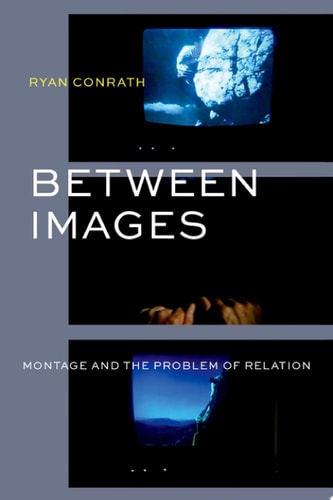
Between Images: Montage and the Problem of Relation
0
0
As an Amazon Associate and affiliate partner, Menrva Books earns from qualifying purchases. Learn more
Author Description
In the early days of moving pictures, filmmakers learned that the montage could be an effective tool to show changes in time or locale. Casablanca's iconic travel montage is mimicked by filmmakers to this day. Since its use in Rocky, the training montage has become a staple for sports films. In the 2004 film Team America, the song "Montage" is a meta explanation of the device's universal use and understanding. Its history and affects are studied and practiced by student and professional filmmakers alike."Between Images proposes a unique theory of montage a technique of relation: a way of rethinking and reshaping how humans relate―to ourselves and each other, to the material world, to the planet and its nonhuman inhabitants. Historically, film criticism has cast editing in one of several roles: as a device of spatiotemporal continuity to maintain the viewer's investment in the story-world; as an agent of disorder that confounds conventions of realism to prompt the viewer's intellectual engagement; and as an expressionistic device for augmenting the duration and combination of shots to leave a sensory impression. While not abandoning such accounts, this book ventures closer to the heart of montage by distinguishing the space between images as itself a powerful source of political, emotional, and aesthetic formation. Venturing into an "expanded field of montage," this study traces the cut and the splice across photographic and cinematic media, where the space between images becomes a setting for navigating and renegotiating the terms of relation, of the "being-with" that connects all forms of life. Between Images brings together a diverse cast of established and emerging film artists―Harun Farocki, Hito Steyerl, Steve McQueen, and Cauleen Smith, Daïchi Saito, and Ja'Tovia Gary among others―to demonstrate the abiding capacity of cinema to effect change.
Menrva's Summary
THE THESIS
This book investigates the space between cinematic images as a fundamental site for political, emotional, and aesthetic formation rather than merely a tool for narrative continuity. Ryan Conrath, a scholar of film and media, challenges traditional film criticism by proposing a theory of montage as a technique of relation. He argues that the cut and the splice function as active spaces for renegotiating human connections to the material world, the planet, and nonhuman life, moving beyond the standard view of editing as a simple device for spatiotemporal organization.
THE SCOPE MAP
What You Will Find
- A theoretical framework that redefines montage as a technique of relation and being-with.
- Analysis of the cut and splice across both photographic and cinematic media.
- Case studies of film artists including Harun Farocki, Hito Steyerl, Steve McQueen, Cauleen Smith, Daïchi Saito, and Ja'Tovia Gary.
- An exploration of how editing practices influence political and social engagement with the world.
THE AUTHORITY PERSPECTIVE
Scholars and film theorists identify this work as a significant contribution to the study of cinematic form and its broader philosophical implications. Readers frequently note the academic density of the prose, which serves as a rigorous examination of how editing shapes our perception of reality.
Page Count:
232
Publication Date:
2023-01-01
Publisher:
Oxford University Press
ISBN-10:
0197612296
ISBN-13:
9780197612293
Philosophy
Media Studies
Cinema Theory
Film Studies
Photography
Art History
Community Tags
Similar Books