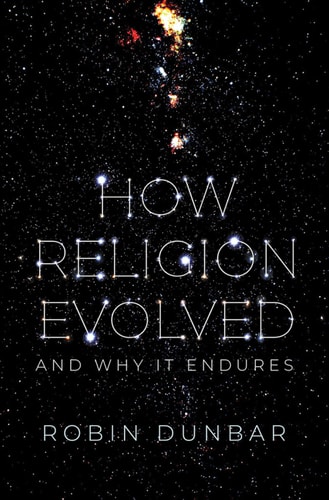
How Religion Evolved: And Why It Endures
0
0
As an Amazon Associate and affiliate partner, Menrva Books earns from qualifying purchases. Learn more
Author Description
One of the world's foremost scholars of evolution tackles one of its essential mysteries: why we believe.Our species diverged from the great apes six to eight million years ago. Since then, our propensity toward spiritual thinking and ritual emerged. How, when, and why did this occur, and how did the earliest, informal shamanic practices evolve into the world religions familiar to us today? What is the evolutionary purpose of religion, and are some individuals more inclined than others to be religious?In How Religion Evolved, Robin Dunbar explores these and other questions, mining the distinctions between religions of experience--as practiced by the earliest hunter-gatherer societies--and doctrinal religions, from Judaism, Christianity, and Islam to Zoroastrianism, Hinduism, Buddhism, and their many derivatives.Examining religion's origins, social functions, its effects on the brain and body, and its place in the modern era, Dunbar offers a fascinating and far-reaching analysis of the quintessentially human impulse to believe.
Menrva's Summary
THE THESIS
This work investigates the evolutionary origins of religious belief and the mechanisms that have allowed spiritual practices to persist throughout human history. Robin Dunbar, a prominent evolutionary psychologist, utilizes data from primatology, archaeology, and cognitive science to construct a framework explaining how spiritual thinking emerged from early hunter-gatherer societies. He argues that religion serves specific social functions that facilitated the survival and cohesion of human groups as they grew in size and complexity over millions of years.
THE SCOPE MAP
What You Will Find
- Analysis of the transition from informal shamanic practices to organized doctrinal religions.
- Examination of the neurological and physiological effects of ritual and belief on the human brain.
- Comparative study of diverse belief systems including Judaism, Christianity, Islam, Hinduism, and Buddhism.
- Exploration of the social functions of religion in maintaining group cooperation and cohesion.
THE AUTHORITY PERSPECTIVE
Experts recognize this text as a significant contribution to the evolutionary study of human culture, noting its accessible synthesis of complex biological and sociological data. Readers frequently highlight the author's ability to bridge the gap between ancient evolutionary history and the persistence of modern religious institutions.
Page Count:
325
Publication Date:
2022-01-01
Publisher:
Oxford University Press
ISBN-10:
0197631843
ISBN-13:
9780197631843
Science
History
Religion
Cultural Anthropology
Customs & Traditions
Evolutionary Biology
Anthropology
Sociology
Community Tags
Similar Books