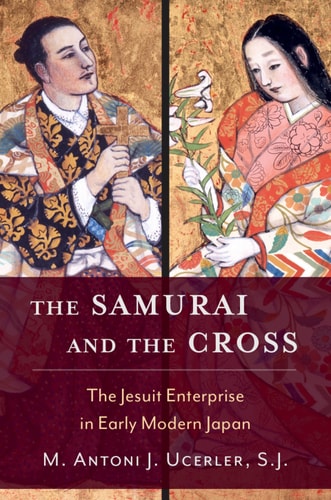
The Samurai and the Cross: The Jesuit Enterprise in Early Modern Japan
0
0
As an Amazon Associate and affiliate partner, Menrva Books earns from qualifying purchases. Learn more
Author Description
In 1614 the shogunate prohibited Christianity amidst rumors of foreign plots to conquer Japan. But more than the fear of armed invasions, it was the ideological threat--or "spiritual conquest"--that the Edo shogunate feared the most. This book explores the encounter of Christianity and premodern Japan in the wider context of global and intellectual history. M. Antoni J. Ucerler examines how the Jesuit missionaries sought new ways to communicate their faith in an unfamiliar linguistic, cultural, and religious environment--and how they sought to "re-invent" Christianity in the context of samurai Japan. They developed an original "moral casuistry" or "cases of conscience" adapted to the specific dilemmas faced by Japanese Christians. This volume situates the European missionary "enterprise" in East Asia within multiple geopolitical contexts: Both Ming China and "Warring States" Japan resisted the presence of foreigners and their beliefs. In Japan, where the Jesuits were facing persecution in the midst of civil war, they debated whether they could intervene in military conflicts to protect local communities. Others advocated for the establishment of a "Christian republic" or civil protectorate. Based on little-known primary sources in various languages, The Samurai and the Cross explores the moral and political debates over religion, law, and "reason of state" that took place on both the European and the Japanese side.
Menrva's Summary
THE THESIS
This work investigates the ideological and political friction between Jesuit missionary efforts and the Edo shogunate's consolidation of power in early modern Japan. M. Antoni J. Ucerler, a scholar of Jesuit history, utilizes a wide array of primary sources in multiple languages to reconstruct the intellectual landscape of the period. He argues that the shogunate's prohibition of Christianity was driven less by the fear of military invasion and more by the perceived threat of a "spiritual conquest" that challenged the state's moral and legal authority. The book analyzes how missionaries attempted to adapt European moral casuistry to the unique cultural and political realities of samurai society.
THE SCOPE MAP
What You Will Find
- Analysis of the 1614 shogunate prohibition of Christianity and its geopolitical motivations.
- Examination of Jesuit strategies for cultural and linguistic adaptation in East Asia.
- Primary source research covering moral and political debates over "reason of state" in both Europe and Japan.
- Case studies on the ethical dilemmas faced by missionaries regarding military intervention and the concept of a "Christian republic."
THE AUTHORITY PERSPECTIVE
Scholars and historians view this text as a significant contribution to the study of global intellectual history and the Jesuit mission in East Asia. Readers frequently note the academic rigor and the depth of the archival research presented throughout the volume.
Page Count:
469
Publication Date:
2022-01-01
Publisher:
Oxford University Press
ISBN-10:
0197640354
ISBN-13:
9780197640357
History
Religion
Biography
Japan
Theology Practical
European History
Christianity
Asian History
Special Topics
Community Tags
Similar Books