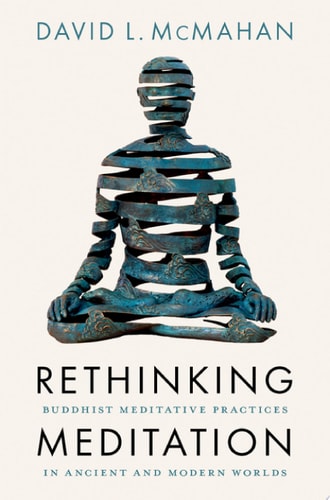
Rethinking Meditation: Buddhist Meditative Practice in Ancient and Modern Worlds
0
0
As an Amazon Associate and affiliate partner, Menrva Books earns from qualifying purchases. Learn more
Author Description
A dizzying array of meditation practices have emerged in the long and culturally diverse history of Buddhism. Yet if you are seeking out meditation today in North America and Europe-and, increasingly, in the rest of the world as well-you will likely encounter one particular type, often under the label "mindfulness." You will find it taught in Zen monasteries, Insight Meditation centers, health clubs, colleges, psychologists' offices, corporations, liberal Christian churches, prisons, and the US military. Countless articles in popular magazines promote its benefits, often depicting it as a panacea for problems as wide-ranging as anxiety, depression, heart disease, eating disorders, and psoriasis. There are books on mindfulness and meditation not only by Buddhist monks but also by medical doctors, psychologists, computer engineers, business consultants, and a US congressman.Meditation teachers will sometimes say that this is the same meditative practice that the Buddha taught over 2500 years ago, and which has been transmitted virtually unchanged down through the centuries to us today. The "cultural baggage" surrounding the practices has changed, but the essence is intact, and what it does for people, whether you're a Buddhist monk or a corporate executive, remains the same.Rethinking Meditation shows that the standard articulation of mindfulness did not come down to us unchanged from the time of the Buddha. Rather, it is a distillation of particular strands of Buddhist thought that have combined with western ideas to create a unique practice tailored to modern life. Rethinking Meditation argues that the relationship between meditative practices and cultural context is much more crucial than is suggested in typical contemporary articulations.David McMahan shows that most of the vast array of meditative practices that have emerged in Buddhist traditions have been filtered out of typical contemporary practice, allowing only a trickle of meditative practices through. Thi
Menrva's Summary
THE THESIS
This book investigates the historical and cultural evolution of mindfulness, challenging the assumption that contemporary meditative practices are identical to those taught by the Buddha. David L. McMahan, a scholar of Buddhist studies, examines how specific strands of Buddhist thought have been distilled and synthesized with Western concepts to create a modern, secularized version of meditation. By analyzing the intersection of ancient tradition and contemporary needs, the author argues that meditative practices are deeply embedded in their cultural contexts rather than being static, universal techniques.
THE SCOPE MAP
What You Will Find
- A historical analysis of how Buddhist meditation has been adapted for North American and European contexts.
- An examination of the 'mindfulness' movement across diverse sectors including corporate, medical, and military environments.
- A critical look at the filtering process that has narrowed the vast array of traditional Buddhist practices into a singular modern focus.
- A discussion on the relationship between cultural baggage and the perceived essence of meditative techniques.
THE AUTHORITY PERSPECTIVE
Scholars and practitioners recognize this work as a significant contribution to the study of modern Buddhism and the globalization of mindfulness. Readers frequently note the academic rigor of the prose, which provides a necessary historical corrective to popular, decontextualized narratives about meditation.
Page Count:
264
Publication Date:
2023-07-28
Publisher:
Oxford University Press
ISBN-10:
0197661742
ISBN-13:
9780197661741
Religion
Philosophy
History
Buddhism
Meditation
Sociology
Community Tags
Similar Books