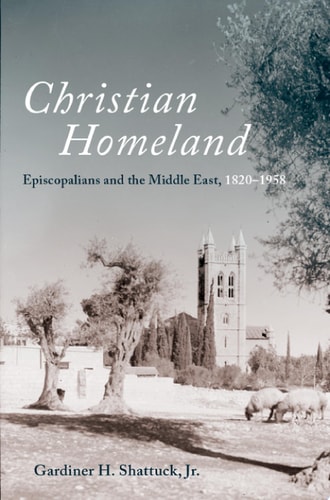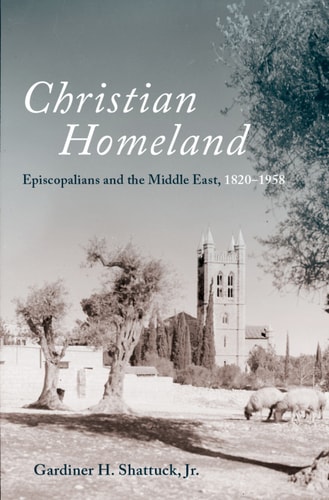
Christian Homeland: Episcopalians and the Middle East, 1820-1958
0
0
As an Amazon Associate and affiliate partner, Menrva Books earns from qualifying purchases. Learn more
Author Description
Christian Homeland focuses on the involvement of clergy and prominent laity of the Episcopal Church in Middle Eastern affairs, both religious and political, between the Greek War of Independence (1821-1829) and the Second Arab-Israeli War (1956-1957), with a brief epilogue covering additional events up to the present day. As the birthplace of the Christian faith, the Middle East had always been an area of fascination to church people in the West, and with the expansion of American diplomatic and commercial interests into the Mediterranean in the early nineteenth century, Episcopalians and other American Protestants felt called to similarly export their religious values into the region. Beginning in the 1830s, Episcopalians established mission posts in Athens and Constantinople (Istanbul), from which they sought to convert Muslims and Jews to Christianity. Having failed to achieve any appreciable evangelistic success with non-Christians, they soon turned their attention to reforming the ancient churches of the East instead. Later assisted by the Church of England's missionary bishopric in Jerusalem, a small, but influential corps of Episcopalians dedicated themselves to keeping church members informed about the Middle East, particularly the status of the region's Christian population, well into the twentieth century. This book analyses how the theological ideas held by Episcopal church leaders not only guided missionary and religious activities, but also influenced their denomination's response to major social and political questions of the late nineteenth and early twentieth centuries issues such as immigration into the United States, genocide, wartime refugee relief, anti-Semitism, Zionism, and the Palestinian Nakba.
Menrva's Summary
THE THESIS
This work investigates how the theological convictions and institutional interests of the Episcopal Church shaped American religious and political engagement with the Middle East from 1820 to 1958. Gardiner H. Shattuck, Jr. utilizes extensive archival research to document the transition of Episcopal involvement from initial evangelistic efforts to a broader focus on reforming ancient Eastern churches and advocating for regional Christian populations. The text argues that these religious activities were inextricably linked to the denomination's broader responses to geopolitical crises, including the rise of Zionism, the Palestinian Nakba, and the complexities of wartime refugee relief.
THE SCOPE MAP
What You Will Find
- Historical analysis of Episcopal mission posts in Athens and Constantinople during the nineteenth century.
- Examination of the shift from proselytizing non-Christians to reforming established Eastern Christian denominations.
- Documentation of the intersection between American Protestant values and foreign policy interests in the Mediterranean.
- Evaluation of how theological frameworks influenced church stances on anti-Semitism, immigration, and genocide.
THE AUTHORITY PERSPECTIVE
Scholars recognize this text as a rigorous examination of the intersection between American denominational history and international relations. Readers frequently note the academic density of the prose and the depth of the primary source research provided by the author.
Page Count:
336
Publication Date:
2022-01-01
Publisher:
Oxford University Press
ISBN-10:
0197665055
ISBN-13:
9780197665053
History
Religion
Missionary Studies
Middle Eastern
Episcopal Church
Islamic Studies
Middle East
Christianity
Modern History
Community Tags
Similar Books