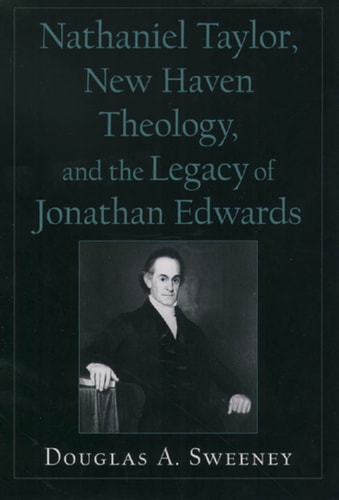
Nathaniel Taylor, New Haven Theology, and the Legacy of Jonathan Edwards
0
0
As an Amazon Associate and affiliate partner, Menrva Books earns from qualifying purchases. Learn more
Author Description
Nathaniel Taylor was arguably the most influential and the most frequently misrepresented American theologian of his generation. While he claimed to be an Edwardsian Calvinist, very few people believed him. This book attempts to understand how Taylor and his associates could have counted themselves Edwardsians. In the process, it explores what it meant to be an Edwardsian minister and intellectual in the 19th century.
Menrva's Summary
THE THESIS
This book investigates the theological tension between Nathaniel Taylor’s self-identification as an Edwardsian Calvinist and the widespread contemporary perception that his views diverged significantly from those of Jonathan Edwards. Douglas A. Sweeney, a scholar of American religious history, utilizes primary source documents and historical analysis to reconstruct the intellectual framework of the 19th-century New Haven Theology. He argues that Taylor’s work represents a specific evolution of Edwardsian thought rather than a total departure, providing a nuanced look at how theological traditions were interpreted and adapted during this period.
THE SCOPE MAP
What You Will Find
- An analysis of the New Haven Theology movement in the 19th century.
- A comparative study of Nathaniel Taylor’s writings against the established Edwardsian tradition.
- Historical context regarding the reception of Taylor’s work by his contemporaries.
Scope Limits
- The text does not provide a comprehensive biography of Nathaniel Taylor’s personal life outside of his theological career.
- It does not cover the global influence of New Haven Theology beyond the American context.
THE AUTHORITY PERSPECTIVE
Scholars of American religious history recognize this work as a significant contribution to the understanding of post-Edwardsian Calvinism. Readers frequently note the academic density of the prose, which is intended for those with a background in theological history.
Page Count:
267
Publication Date:
2002-01-01
Publisher:
Oxford University Press
ISBN-10:
0190288531
ISBN-13:
9780190288532
History
Religion
New England
American History
Theology
Calvinism
Christianity
Intellectual History
Community Tags
Other Editions(3)


Similar Books