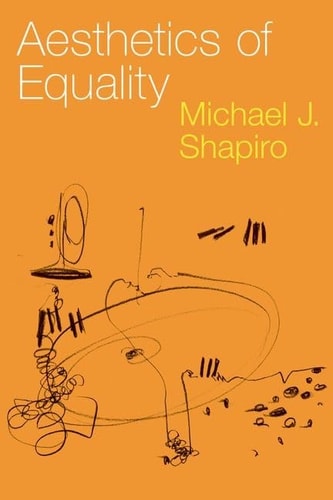
Aesthetics of Equality
0
0
As an Amazon Associate and affiliate partner, Menrva Books earns from qualifying purchases. Learn more
Author Description
Presuming that the problem of political equality, as it bears on both persons and assemblages, is about being accorded access to the material and symbolic resources needed to manage an effective civic presence, Michael J. Shapiro's critical interventions engage the way aesthetic genres illustrate this problem. Addressing literary, cinematic, photographic, musical, art historical, and architectural compositions, Shapiro's inquiries encounter the way a wide variety of texts elevate voices, bodies, and life dramas that have existed below thresholds of recognition.In Aesthetics of Equality, Shapiro offers a guide to aesthetic methods that emphasize the way writing strategies engage diverse artistic genres to articulate political problems. Emphasizing relationships between compositional form and ideational commitment, while focusing on the texts' protagonists (aesthetic subjects), the analyses cover a wide variety of spaces and historical moments in scenes ranging from ancient Israel and Egypt in the Old Testament's Genesis to the ethno-histories of California and Texas, with attention on the right to urban space in such megacities as Paris, New York, Los Angeles, and Istanbul.
Menrva's Summary
THE THESIS
This book investigates how aesthetic genres and compositional forms function as critical tools to articulate and address the complex problem of political equality. Michael J. Shapiro, a political theorist, examines how various artistic mediums—including literature, cinema, and architecture—provide the symbolic and material resources necessary for marginalized voices to achieve civic recognition. By analyzing the relationship between form and ideational commitment, the author argues that aesthetic subjects can effectively challenge existing power structures and elevate life dramas that have historically remained below the threshold of public awareness.
THE SCOPE MAP
What You Will Find
- Analysis of diverse artistic genres including literature, cinema, photography, music, and architecture.
- A methodological framework for evaluating how writing strategies engage with political problems.
- Case studies spanning historical and geographical contexts, from ancient Israel and Egypt to modern megacities like Paris, New York, and Istanbul.
- Examination of the right to urban space and the representation of marginalized bodies and voices.
THE AUTHORITY PERSPECTIVE
Scholars in political theory and cultural studies identify this work as a significant contribution to the intersection of aesthetics and civic engagement. Readers frequently note the academic density of the prose, which requires a foundational understanding of critical theory to fully grasp the author's arguments.
Page Count:
240
Publication Date:
2023-01-24
Publisher:
Oxford University Press
ISBN-10:
0197670350
ISBN-13:
9780197670354
Philosophy
Sociology
Aesthetics