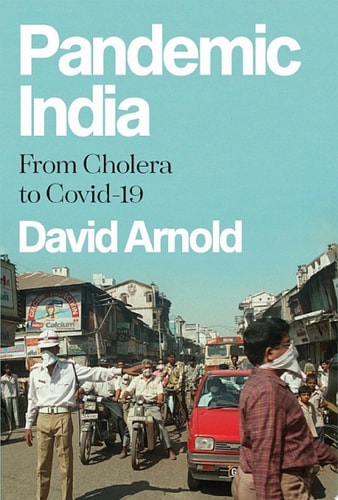
Pandemic India: From Cholera to Covid-19
0
0
As an Amazon Associate and affiliate partner, Menrva Books earns from qualifying purchases. Learn more
Author Description
Covid-19 has given renewed, urgent attention to "the pandemic" as a devastating, recurrent global phenomenon. Today the term is freely and widely used-but in reality, it has a long and contested history, centred on South Asia. Pandemic India is an innovative enquiry into the emergence of the idea and changing meaning of pandemics, exploring the pivotal role played by-or assigned to-India over the past 200 years. Using the perspectives of the social historian and the historian of medicine, and a wide range of sources, it explains how and why past pandemics were so closely identified with South Asia; the factors behind outbreaks' exceptional destructiveness in India; responses from society and the state, both during and since the colonial era; and how such collective catastrophes have changed lives and been remembered. Giving a 'long history' to India's current pandemic, the book offers comparisons with earlier epidemics of cholera, plague and influenza. David Arnold assesses the distinctive characteristics and legacies of each episode, tracking the evolution of public health strategies and containment measures. This is a historian's reflection on time as seen through the pandemic prism, and on the ways the past is used--or misused--to serve the present.
Menrva's Summary
THE THESIS
This book investigates how the concept of the pandemic has been historically constructed and contested, with a specific focus on India's role as a central site for global disease narratives over the last two centuries. David Arnold, a distinguished historian of South Asia and medicine, utilizes a vast array of archival sources and medical records to challenge modern perceptions of disease outbreaks. By examining the evolution of public health strategies from the colonial era to the present, he argues that the identification of South Asia as a primary source of contagion is a historical construct that has shaped both state policy and societal memory.
THE SCOPE MAP
What You Will Find
- A historical analysis of major epidemics including cholera, plague, and influenza.
- An examination of the intersection between colonial governance and public health containment measures.
- A comparative study of how past outbreaks inform contemporary responses to Covid-19.
- An exploration of the social and political factors that contribute to the perceived destructiveness of pandemics in the Indian subcontinent.
THE AUTHORITY PERSPECTIVE
Experts recognize this work as a significant contribution to the history of medicine, noting its ability to contextualize modern health crises within a long-term colonial and post-colonial framework. Scholars frequently highlight the author's meticulous use of primary sources to deconstruct the geopolitical biases inherent in global epidemiological narratives.
Page Count:
428
Publication Date:
2022-01-01
Publisher:
Oxford University Press
ISBN-10:
0197674550
ISBN-13:
9780197674550
History
Asia history
Medicine
Medical
Sociology of Health
Allied Health
Epidemiology
Asian History
Public Health
Community Tags
Similar Books