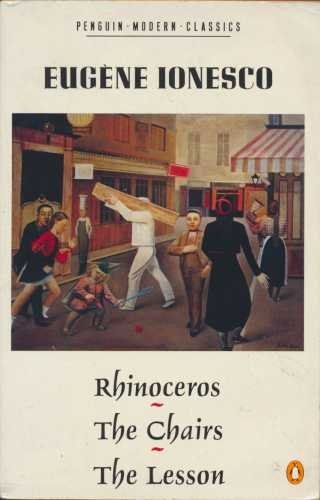
Modern Classics: Rhinoceros, The Chairs, The Lesson
0
0
As an Amazon Associate and affiliate partner, Menrva Books earns from qualifying purchases. Learn more
Author Description
The sublime is confused with the ridiculous in this savage commentary on the human condition, a staple of every theatre classroom and 20th century drama. A small town is besieged by one roaring citizen who becomes a rhinoceros and proceeds to trample on the social order. As more citizens are transformed into rhinoceroses, the trampling becomes overwhelming, and more and more citizens become rhinoceroses. One sane man, Berenger, remains, unable to change his form and identity.
Menrva's Summary
THE PULSE
A small town faces an existential crisis when its inhabitants begin transforming into rhinoceroses, challenging the protagonist to maintain his individuality against a tide of mass conformity. Berenger, an unremarkable and often alienated man, finds himself the sole holdout in a society rapidly succumbing to a literal and metaphorical transformation into beasts. As his friends, colleagues, and neighbors embrace the rhinoceros state, he must navigate the psychological pressure to conform while grappling with his own sense of self. The narrative utilizes the framework of absurdist drama to explore the fragility of human identity and the ease with which societal norms can collapse. The play functions as a logical progression of the absurd, where the physical transformation serves as a catalyst for examining political and social complicity.
INSIDE THE PAGES
- Use of absurdist dialogue to highlight the breakdown of communication
- Satirical depiction of bureaucratic and intellectual complacency
- Exploration of mass hysteria as a social contagion
- Focus on the isolation of the individual within a conformist collective
- Symbolic use of the rhinoceros as a representation of mindless force
- Non-linear progression of the transformation process
- Minimalist stage directions that emphasize the surreal nature of the events
- Philosophical inquiry into the nature of human morality and resistance
THE COLLECTIVE ECHO
Readers and critics frequently identify these works as foundational texts of the Theatre of the Absurd, noting their effectiveness in portraying the irrationality of human behavior. Discussion often centers on the political allegories embedded within the transformation, particularly regarding the rise of totalitarian ideologies in the mid-20th century. The pacing is often described as relentless, mirroring the rapid spread of the rhinoceros phenomenon throughout the town. Many highlight the stark contrast between the comedic absurdity of the dialogue and the underlying dread of the thematic content. The work remains a frequent subject of analysis for its commentary on the difficulty of maintaining personal integrity in the face of overwhelming social pressure.
Page Count:
224
Publication Date:
1985-07-02
Publisher:
Penguin Classic
ISBN-10:
0140077677
ISBN-13:
9780140077674
Drama
Satire
Dramas & Plays
Plays
Absurdist
20th Century
Community Tags
Similar Books