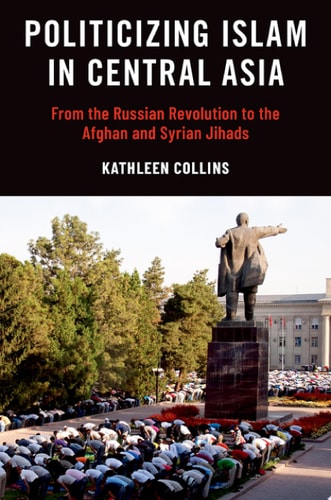
Politicizing Islam in Central Asia: From the Russian Revolution to the Afghan and Syrian Jihads
0
0
As an Amazon Associate and affiliate partner, Menrva Books earns from qualifying purchases. Learn more
Author Description
A sweeping history of Islamism in Central Asia from the Russian Revolution to the present through Soviet-era archival documents, oral histories, and a trove of interviews and focus groups.Few observers anticipated a surge of Islamism in Central Asia, after seventy years of forced communist atheism. Muslims do not inevitably support Islamism, a modern political ideology of Islam. Yet, Islamism became the dominant form of political opposition in post-Soviet Uzbekistan and Tajikistan. In Politicizing Islam in Central Asia, Kathleen Collins explores the causes, dynamics, and variation in Islamist movements-first within the USSR, and then in the post-Soviet states of Tajikistan, Uzbekistan, and Kyrgyzstan. Drawing upon extensive ethnographic and historical research on Islamist mobilization, she explains the strategies and relative success of each Central Asian Islamist movement. Collins argues that in each case, state repression of Islam, by Soviet and post-Soviet regimes, together with the diffusion of religious ideologies, motivated Islamist mobilization. Sweeping in scope, this book traces the dynamics of Central Asian Islamist movements from the Soviet era through the Tajik civil war, the Afghan jihad against the US, and the foreign fighter movement joining the Syrian jihad.
Menrva's Summary
THE THESIS
This book investigates the factors that transformed Islam into a primary vehicle for political opposition in Central Asia following the collapse of the Soviet Union. Kathleen M. Collins, a scholar of Central Asian politics, utilizes a combination of Soviet-era archival records, extensive oral histories, and original field interviews to construct her argument. She posits that the intersection of state-led repression and the strategic diffusion of religious ideologies created the necessary conditions for Islamist mobilization in Tajikistan, Uzbekistan, and Kyrgyzstan. By analyzing these movements from the early twentieth century to the contemporary era, Collins provides a framework for understanding why Islamism gained traction in regions previously subjected to decades of enforced secularism.
THE SCOPE MAP
What You Will Find
- Historical analysis of Islamist movements from the Russian Revolution through the Syrian jihad.
- Comparative study of political mobilization in Tajikistan, Uzbekistan, and Kyrgyzstan.
- Methodology incorporating archival research, ethnographic interviews, and focus groups.
- Examination of the causal link between state repression and the rise of political Islam.
THE AUTHORITY PERSPECTIVE
Experts recognize this work as a comprehensive study of political Islam in the post-Soviet space, noting its rigorous use of primary source data. Scholars frequently highlight the book's ability to bridge the gap between historical context and contemporary political dynamics in Central Asia.
Page Count:
584
Publication Date:
2023-01-01
Publisher:
Oxford University Press
ISBN-10:
0197685080
ISBN-13:
9780197685082
History
Central Asia
Islam
International relations
Sociology
Comparative Politics
Community Tags
Similar Books