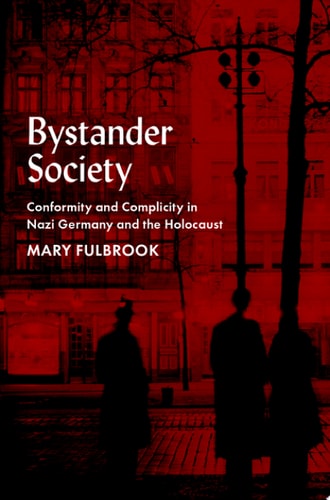
Bystander Society: Conformity and Complicity in Nazi Germany and the Holocaust
0
0
As an Amazon Associate and affiliate partner, Menrva Books earns from qualifying purchases. Learn more
Author Description
In this powerful and revelatory new work, historian Mary Fulbrook takes on one of the most fraught issues in modern times: the role of ordinary Germans in enabling the rise of Nazism and with it the exclusion, persecution, and then extermination of millions of people across Europe. The question often asked of the Nazi era―what and when did ordinary Germans know about the crimes being committed in their name?―is, Fulbrook argues, the wrong one. The real question is how they interpreted and acted―or failed to act―upon what they knew; and how, in the process, became complicit.To address these issues, Fulbrook examines German society before and during the Nazi regime, exploring the social conditions that eventually facilitated mass murder. She explores the creation of a "bystander society," one in which the majority of Germans were either unable to act or developed growing indifference to the fate of those deemed "non-Aryan"―mainly Jews― and therefore outside the Volksgemeinschaft, or national community. Over the course of the 1930s, from Hitler's assumption of the German chancellorship, through the passage of the Nuremberg Laws, to the devastation of Kristallnacht, this "bystander society" became more entrenched. Ordinary Germans became passive about the fate of "non-Aryans" and, by turning away, contributed to their isolation from mainstream society. For many citizens of the Reich, conformity led progressively through growing complicity in everyday racism to more active involvement in genocide during World War Two. In other words, social changes under Nazi rule shaped the perceptions and responses of German citizens, creating the conditions that made the Holocaust possible.Based on an extraordinary archive of personal accounts, Bystander Society moves between the individual and the wider context, highlighting the significance of changing social and political circumstances over the course of the Nazi period by offering first-hand testimony both from those who were its
Menrva's Summary
THE THESIS
This work investigates how ordinary German citizens transitioned from passive observers to complicit participants in the systemic persecution and genocide orchestrated by the Nazi regime. Historian Mary Fulbrook challenges the traditional focus on what the public knew, arguing instead that the central issue is how individuals interpreted their reality and chose to act—or remain indifferent—within a shifting social framework. By analyzing the structural conditions of the Third Reich, she demonstrates how the creation of a 'bystander society' facilitated the normalization of exclusion and mass murder.
THE SCOPE MAP
What You Will Find
- Analysis of German social conditions from the 1930s through the end of World War II.
- Examination of the Volksgemeinschaft and its role in isolating 'non-Aryan' populations.
- Utilization of extensive personal accounts and first-hand testimonies to bridge individual experience with broader political trends.
- Investigation into the psychological and social mechanisms of conformity and everyday racism.
THE AUTHORITY PERSPECTIVE
Scholars recognize this text as a significant contribution to the study of social complicity during the Holocaust, noting its departure from top-down political histories. Readers frequently highlight the depth of the archival research and the clarity with which the author connects individual choices to systemic state violence.
Page Count:
488
Publication Date:
2023-01-01
Publisher:
Oxford University Press
ISBN-10:
0197691714
ISBN-13:
9780197691717
History
Holocaust
Germany history
Nazi Germany
Social History
Community Tags
Similar Books