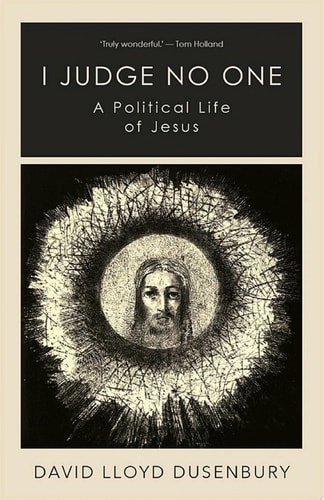
I Judge No One: A Political Life of Jesus
0
0
As an Amazon Associate and affiliate partner, Menrva Books earns from qualifying purchases. Learn more
Author Description
Why was Jesus, who said "I judge no one," put to death for a political crime? Of course, this is a historical question--but it is not only historical. Jesus's life became a philosophical theme in the first centuries of our era, when "pagan" and Christian philosophers clashed over the meaning of his sayings and the significance of his death. Modern philosophers, too, such as Immanuel Kant and Friedrich Nietzsche, have tried to retrace the arc of Jesus's life and death.I Judge No One is a philosophical reading of the four memoirs, or "gospels," that were fashioned by early Christ-believers and collected in the New Testament. It offers original ways of seeing a deeply enigmatic figure who calls himself the Son of Man.David Lloyd Dusenbury suggests that Jesus offered his contemporaries a scandalous double claim. First, that human judgements are pervasive and deceptive; and second, that even divine laws can only be fulfilled in the human experience of love. Though his life led inexorably to a grim political death, what Jesus's sayings revealed--and still reveal--is that our highest desires lie beyond the political.
Menrva's Summary
THE THESIS
This book investigates the paradox of how a figure who preached non-judgment could be executed for a political crime. David Lloyd Dusenbury, a scholar of philosophy and religion, examines the four canonical gospels through a philosophical lens rather than a purely historical or theological one. He argues that Jesus presented a radical challenge to the political structures of his time by asserting that human judgment is inherently flawed and that divine law is only realized through the human experience of love.
THE SCOPE MAP
What You Will Find
- A philosophical analysis of the four canonical gospels.
- An examination of the historical and political context of the Roman trial of Jesus.
- A comparative study of how thinkers like Immanuel Kant and Friedrich Nietzsche interpreted the life of Jesus.
- A thematic exploration of the tension between divine law and human political authority.
THE AUTHORITY PERSPECTIVE
Scholars and readers note the intellectual rigor Dusenbury brings to the intersection of political theory and biblical studies. The text is recognized for its ability to bridge the gap between ancient philosophical debates and modern political thought.
Page Count:
354
Publication Date:
2023-01-01
Publisher:
Oxford University Press
ISBN-10:
019769618X
ISBN-13:
9780197696187
Philosophy
Religion
History
Jesus Christ
Theology
Religion
Philosophy & Religion
Community Tags
Similar Books