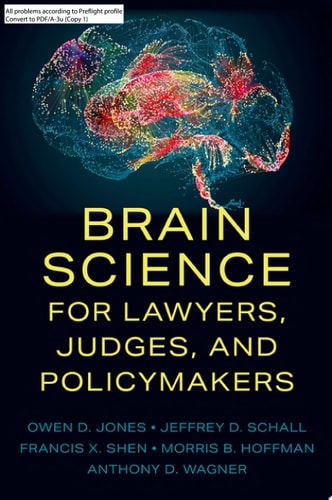
Brain Science for Lawyers, Judges, and Policymakers
0
0
As an Amazon Associate and affiliate partner, Menrva Books earns from qualifying purchases. Learn more
Author Description
Brain science in the form of neuroscientific evidence now appears frequently in courtrooms and policy discussions alike. Many legal issues are at stake, such as how to separate the best uses of brain science information from those that are potentially biasing or misleading. It is crucial to evaluate brain science evidence in light of relevant legal standards (such as the Daubert and Frye Rules).Brain Science for Lawyers, Judges, and Policymakers responds to this rapidly changing legal landscape, providing a user-friendly introduction to the fundamentals of neuroscience for lawyers, advocates, judges, legal academics, and policymakers. It features detailed but clear illustrations, as well as a comprehensive and accessible overview of developments in legally relevant neuroscience. Readers will learn brain science terms, how to understand and discuss brain structure and function in legally relevant contexts, and how to avoid over- or under-interpreting neuroscientific evidence.The book begins with a survey of the kinds of litigation, legislation, and regulation where neuroscience is currently being used. It provides accessible descriptions of basic brain anatomy and brain function as well as an overview of how modern technologies can reveal the brain structures and brain functions of individuals. It finishes with cautions and limitations, including timely and thought-provoking observations about where the future of neurolaw might lead. Throughout, the authors offer clear and concise guidance on understanding both the promise and the limitations of using brain science in law and policymaking.
Menrva's Summary
THE THESIS
This book investigates the intersection of neuroscientific evidence and the legal system, addressing how practitioners can accurately interpret and apply brain science within courtroom and policy environments. The authors, a multidisciplinary team of legal scholars and neuroscientists, provide a framework for navigating the complexities of neuro-evidence. They argue that while neuroscience offers significant insights into human behavior, its application in law requires a rigorous understanding of both scientific capabilities and inherent limitations. By bridging the gap between laboratory findings and legal standards, the text aims to prevent the misuse of scientific data in judicial and legislative decision-making.
THE SCOPE MAP
What You Will Find
- An overview of legal standards for evidence, including the Daubert and Frye Rules.
- Fundamental principles of brain anatomy and modern neuroimaging technologies.
- Analysis of current litigation and regulatory contexts where neuroscience is applied.
- Methodologies for identifying potential biases and avoiding the over-interpretation of scientific data.
THE AUTHORITY PERSPECTIVE
Legal professionals and academics frequently cite this work as a foundational resource for understanding the practical application of neuroscience in the courtroom. Experts highlight the text for its ability to translate complex biological concepts into actionable guidance for those without a scientific background.
Page Count:
168
Publication Date:
2024-01-01
Publisher:
Oxford University Press
ISBN-10:
0197748864
ISBN-13:
9780197748862
Psychology
Science
Non-Fiction
Law
Neuroscience
Policy
Community Tags
Similar Books