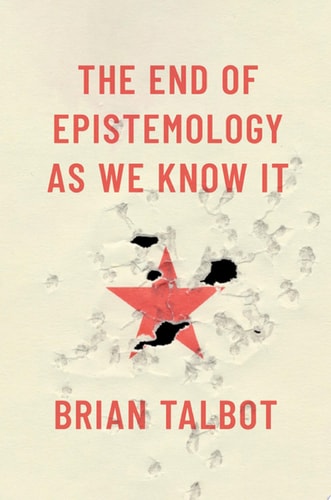
The End of Epistemology As We Know It
0
0
As an Amazon Associate and affiliate partner, Menrva Books earns from qualifying purchases. Learn more
Author Description
In The End of Epistemology As We Know It Brian Talbot explores various ways in which epistemic norms could matter, and shows how epistemic norms as standardly understood fall short on each. He argues that we can and should replace existing norms with norms that matter more. These replacement norms will be quite different from the norms standardly accepted by philosophers.In whichever way we try to explain the importance of the epistemic, it does not matter at all what we believe about most topics or why we believe it. When what we believe does matter, it is often not particularly important that our beliefs are true, but rather just that they are good enough for our purposes. When the truth is not what really matters, then no truth-connected epistemic notions, such as reliability, evidence, coherence, accuracy, or knowledge, are really normatively significant. Even when truth is genuinely important, Talbot argues, the standard epistemic norms do not properly aim at truth, because they do not allow us to sacrifice one true belief for the sake of others. In light of all of this, epistemic norms as standardly conceived are not really concerned with what matters.Talbot explains how epistemic norms that genuinely matter should replace truth-based epistemic notions with conceptions of success, reasons, and justification aimed at the "good enough." These new norms will require us to form some seemingly bad beliefs--beliefs that violate all standard norms by going against our evidence, being incoherent, or even being clearly false--in order to improve other beliefs. In fact, they will sometimes allow our beliefs to be bad for no reason whatsoever. These arguments open the door for new projects in epistemology. They reveal the need for new accounts of epistemic goodness and rationality, and illuminate how to rigorously pursue these in ways that are genuinely attuned to what is worthwhile.
Menrva's Summary
THE THESIS
Brian Talbot investigates whether traditional epistemic norms effectively address what is truly important in human belief systems. Talbot, a philosopher, challenges the standard reliance on truth-connected notions like reliability, evidence, and accuracy. He argues that these conventional norms often fail to align with practical human needs, proposing instead a shift toward norms centered on success, reasons, and the concept of the "good enough."
THE SCOPE MAP
What You Will Find
- A critique of truth-connected epistemic notions including reliability, coherence, and accuracy.
- An argument for replacing standard philosophical norms with pragmatic, success-oriented criteria.
- Theoretical exploration of how seemingly "bad" or false beliefs can sometimes serve higher epistemic goals.
- A framework for redefining rationality and epistemic goodness to better reflect human values.
THE AUTHORITY PERSPECTIVE
Experts view this work as a provocative challenge to analytic epistemology that forces a re-evaluation of foundational normative assumptions. Readers often note the dense, rigorous nature of the arguments, which are intended for those familiar with contemporary philosophical discourse on belief and justification.
Page Count:
272
Publication Date:
2024-01-01
Publisher:
Oxford University Press
ISBN-10:
0197743633
ISBN-13:
9780197743638
Non-Fiction
Philosophy
Logic
Epistemology
Knowledge Theory
Philosophy of
Community Tags
Other Editions(2)

Similar Books
Reader Comments
Share Your Thoughts
No comments yet. Be the first to share your thoughts!