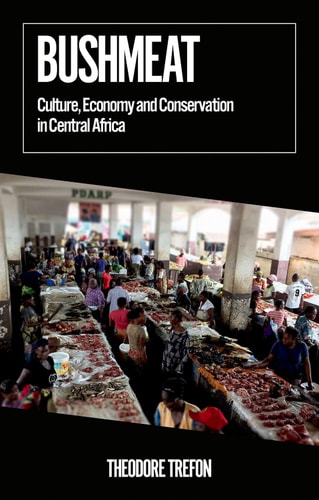
Bushmeat: Culture, Economy and Conservation in Central Africa
0
0
As an Amazon Associate and affiliate partner, Menrva Books earns from qualifying purchases. Learn more
Author Description
In much of Central Africa, eating wildlife is seen as a normal, desirable and common-sense practice. Almost all wild animals, from the largest mammals to the smallest invertebrates, are hunted, traded and consumed, providing vital income and nutrition for millions of people. But as demand for bushmeat grows, animal populations are being decimated, directly impacting biodiversity, local economies and public health.Taking an interdisciplinary approach, Bushmeat explores questions ranging from deforestation and conservation strategies to infectious diseases, urban street food and law enforcement. It explains how the popularity of wild meat consumption has spread from rural areas into major cities, fueled by rapid urbanization, poorly defined regulations, and developing trade networks-whether small-scale and informal, or commercial and politically connected. While unsustainable hunting practices pose clear problems for wildlife conservation, they also increase the risk of rural food insecurity and of new infectious diseases emerging-as HIV, Ebola and Covid-19 have shown. But cultural attachment to wild meat, and its dietary importance for many communities, make the "bushmeat crisis" difficult to solve.Based on extensive interviews and a comprehensive review of secondary literature, Bushmeat presents a startling account of one of the Anthropocene's catastrophes in the making.
Menrva's Summary
THE THESIS
This book investigates the complex intersection of cultural tradition, economic necessity, and ecological sustainability surrounding the consumption of wild animal meat in Central Africa. Theodore Trefon, a researcher specializing in environmental governance and Central African studies, utilizes a multidisciplinary framework to analyze how the transition of bushmeat from a rural subsistence practice to an urban commodity creates systemic risks. By synthesizing field interviews with secondary literature, the author argues that the bushmeat crisis is not merely an environmental issue but a multifaceted challenge involving public health, food security, and political economy.
THE SCOPE MAP
What You Will Find
- Analysis of the transition of bushmeat trade from informal rural networks to commercial urban markets.
- Examination of the link between unsustainable hunting practices and the emergence of zoonotic infectious diseases.
- Evaluation of the socio-economic drivers that make wild meat a vital source of nutrition and income for local populations.
- Discussion of the failures in current law enforcement and regulatory frameworks regarding wildlife conservation.
THE AUTHORITY PERSPECTIVE
Experts recognize this work as a critical, balanced examination of a highly contentious environmental issue that avoids simplistic solutions. Readers frequently note the academic rigor and the author's ability to contextualize the bushmeat trade within the broader realities of the Anthropocene.
Page Count:
256
Publication Date:
2023-06-15
Publisher:
Oxford University Press
ISBN-10:
0197746373
ISBN-13:
9780197746370
Economics
Africa - History
Ecology
Anthropology
Sociology
Manners and customs
Conservation
Community Tags
Similar Books