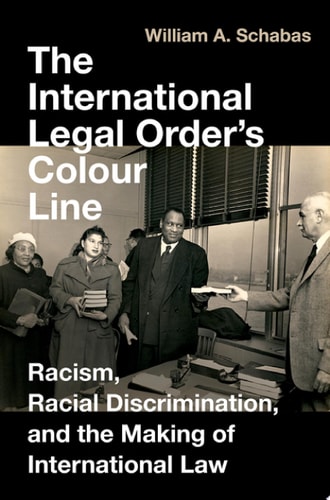
The International Legal Order's Colour Line: Racism, Racial Discrimination, and the Making of International Law
0
0
As an Amazon Associate and affiliate partner, Menrva Books earns from qualifying purchases. Learn more
Author Description
Prior to the twentieth century, international law was predominantly written by and for the 'civilised nations' of the white Global North. It justified doctrines of racial inequality and effectively drew a colour line that excluded citizens of the Global South and persons of African descent from participating in international law-making while subjecting them to colonialism and the slave trade.The International Legal Order's Colour Line narrates this divide and charts the development of regulation on racism and racial discrimination at the international level, principally within the United Nations. Most notably, it outlines how these themes gained traction once the Global South gained more participation in international law-making after the First World War. It challenges the narrative that human rights are a creation of the Global North by focussing on the decisive contributions that countries of the Global South and people of colour made to anchor anti-racism in international law.After assessing early historical developments, chapters are devoted to The League of Nations, the adoption and implementation of the International Convention on the Elimination of All Forms of Racial Discrimination, the debates within UNESCO on the notion of race itself, expansion of crimes against humanity to cover peacetime violations, as well as challenges to apartheid in South Africa. At all stages, the focus lies on the role played by those who have been the victims of racial discrimination, primarily the countries of the Global South, in advancing the debate and promoting the development of new legal rules and institutions for their implementation. The International Legal Order's Colour Line provides a comprehensive history and compelling new approach to the history of human rights law.
Menrva's Summary
THE THESIS
This work investigates how the historical exclusion of non-white nations from international law-making shaped the development of global anti-racism frameworks. William A. Schabas, a prominent scholar in international law and human rights, utilizes historical analysis and legal documentation to challenge the Eurocentric narrative of human rights origins. He argues that the Global South and marginalized populations were the primary architects of modern anti-racism legal standards, rather than passive recipients of Western legal norms.
THE SCOPE MAP
What You Will Find
- Historical analysis of the League of Nations and its approach to racial equality.
- Examination of the International Convention on the Elimination of All Forms of Racial Discrimination.
- Case studies on the legal challenges to apartheid in South Africa.
- Documentation of the role of Global South nations in expanding the definition of crimes against humanity.
THE AUTHORITY PERSPECTIVE
Experts recognize this text as a critical intervention in the historiography of international law, noting its rigorous focus on the agency of non-Western states. Scholars frequently highlight the book's utility for those seeking to understand the intersection of colonial history and contemporary human rights jurisprudence.
Page Count:
496
Publication Date:
2023-01-01
Publisher:
Oxford University Press
ISBN-10:
0197744478
ISBN-13:
9780197744475
History
International Law
Human rights
Law history
Race Relations
Sociology
Community Tags
Similar Books